


Virgo Transport 8 Ferry Sinks: 107 Rescued, 130 Still Missing
Last update: September 13, 2026
Disclaimer: This website may contain affiliate links, which means we may earn a commission if you click on the link and make a purchase. We only recommend products or services that we personally use and believe will add value to our readers. Your support is appreciated!
Look, if you've ever taken a ferry in Indonesia, you know how utterly vital - and how nerve-wracking - they can be. This weekend, that everyday journey turned into a nightmare.
Here's what we know so far.
A Frightening Final Message.
Six people are confirmed dead, 107 have been miraculously pulled from the water, and 130 others are still missing after a passenger ferry went missing in the Java Sea, according to Indonesia's national search and rescue agency, Basarnas.
The ship in question is the Virgo Transport 8, carrying 243 people in total - 213 passengers and 30 crew.
The Virgo Transport 8 lost contact after hitting severe bad weather in the middle of the Java Sea.
She was on one of Indonesia's busiest domestic routes - from Surabaya in East Java to Banjarmasin in South Kalimantan on the island of Borneo. Her last known position was about 150km (93 miles) south of Banjarmasin.
The timeline is chillingly tight. The ferry left Surabaya at 10:33 on Saturday morning, scheduled to arrive Sunday at 14:00. At around 02:00 local time on Sunday (18:00 GMT Saturday), she was last tracked. Just two hours later, at 04:10, her operator PT Virgo sent the distress report.
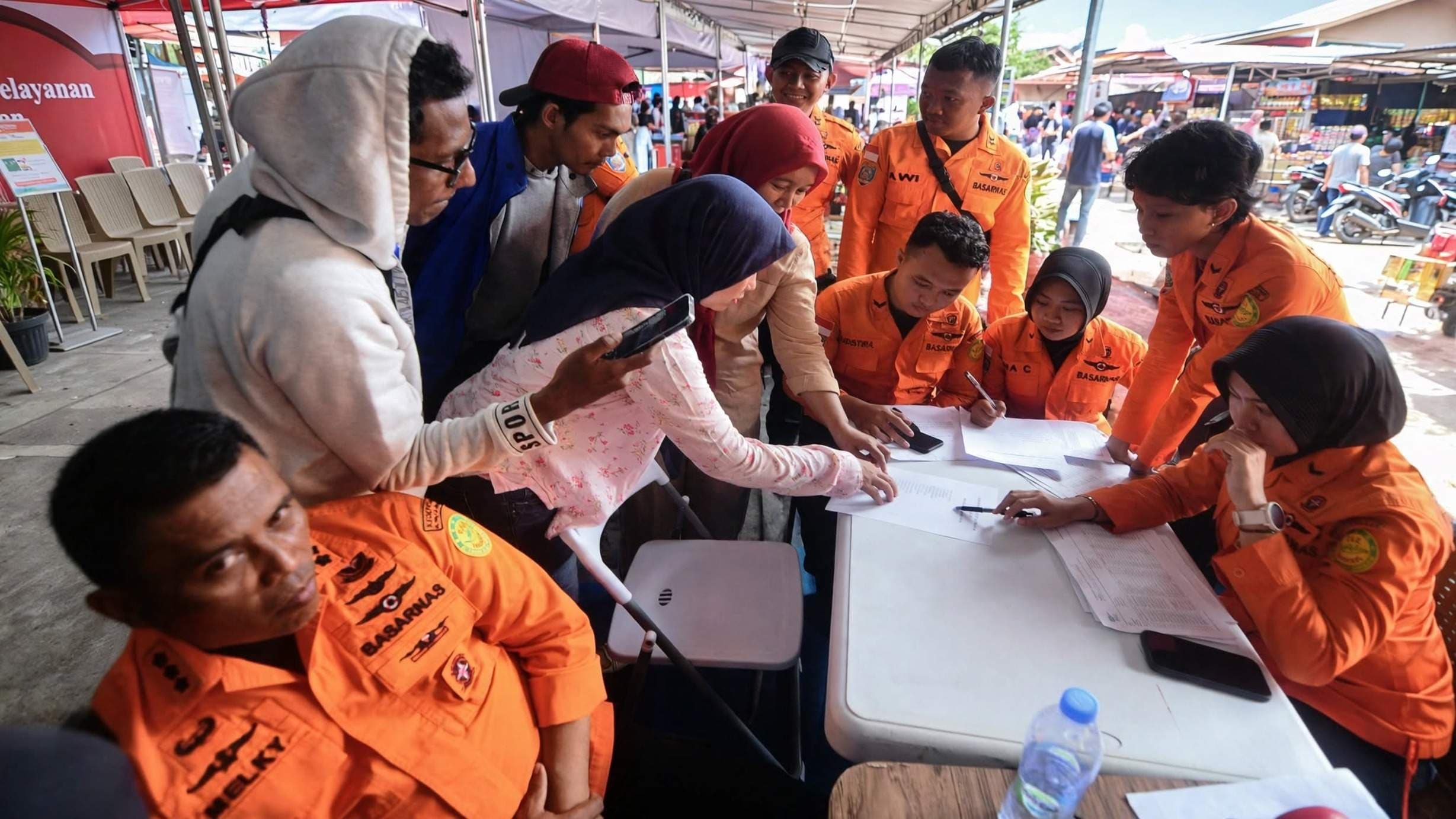
A massive joint operation is now underway. We're talking 280 personnel, Indonesian Navy ships, maritime police, and a helicopter scouring the Java Sea. Basarnas has also alerted every single vessel in the area to keep watch. An emergency ops post has been set up at Trisakti Port in Banjarmasin.
The search for the remaining passengers is still ongoing.
This Is Why It Hits So Hard.
Behind those numbers are families.
Rusmilawati, a resident of Banjarmasin, rushed to Trisakti Port on Sunday morning because eight of her relatives were on board. They had flown to Java for a religious pilgrimage - visiting the tombs of several Islamic scholars, a deeply respected tradition known as ziarah wali - and decided to try the ship for the journey home.
"They flew there initially, but for the return journey they wanted to try travelling by ship," she told BBC Indonesia.
As of Sunday afternoon, she had heard nothing.
The last contact? A WhatsApp status update from one of them late on Saturday night: "The waves are really frightening tonight. Or is this just what it's normally like travelling by ship, rocking and crashing against the waves?"
"Hopefully they're safe," Rusmilawati said. It’s a sentence thousands of families across the archipelago are whispering right now.
Why Does This Keep Happening? The Bigger Picture.
This isn't an isolated tragedy, and that's the painful truth.
Indonesia is the world's largest archipelago with more than 17,000 islands. For millions, ferries aren't a holiday extra, they're the bus - the only affordable link between islands for work, school, and family. But safety enforcement is notoriously lax, vessels are often old and overloaded, and the seas can turn brutal fast, especially during monsoon transitions.
The list is heartbreakingly long:
* In December 2006, more than 400 people died when a crowded ferry broke apart and sank in this same Java Sea during a violent storm.
* In 2009, more than 300 people are estimated to have drowned when a ferry sank between Sulawesi and Borneo.
* In 2018, 192 people drowned when an overloaded ferry overturned on Lake Toba, Sumatra - one of the world's deepest lakes.
* Just last month, another ferry caught fire off Madura Island, killing five, and less than two weeks ago a fire near Bali left one dead and four missing.
That history is why maritime experts are once again asking tough questions about overcrowding, lifejacket availability, weather-related sailing bans, and how distress signals are tracked.
Why It Matters?
This matters because Indonesia's reliance on sea transport is only growing. With over 270 million people spread across three time zones, a safe, regulated ferry system is literally a matter of national connectivity and economic survival. When a ship goes missing 150km from port, it exposes gaps in real-time tracking, emergency response, and passenger manifests that can mean life or death.
What Happens Next?
So, what now?
1. The 72-Hour Window: Search and rescue teams are in the critical golden period. Survivors are often found clinging to debris, life rafts, or wearing lifejackets. The helicopter search will be key before nightfall.
2. Manifest Verification: Officials will be cross-checking the 213 passenger names with those rescued and the families at Trisakti Port. In past incidents, actual numbers on board have exceeded the official manifest.
3. Investigation: Once rescue becomes recovery, Indonesia's National Transportation Safety Committee (KNKT) will look at weather data, the ship's seaworthiness certificate, and why it sailed into known rough conditions.
We will be tracking updates from Basarnas and the joint task force throughout the day.
Our thoughts are with Rusmilawati and every family waiting at the port.
Source: cbinews.tv
#Indonesia #JavaSea #FerryAccident #VirgoTransport8 #Surabaya #Banjarmasin #BreakingNews #MaritimeSafety #IndonesiaNews #SearchAndRescue #cbiNews