

US Treasury Unveils Operation Economic Outcast Against Tehran
Last update: August 25, 2026
Disclaimer: This website may contain affiliate links, which means we may earn a commission if you click on the link and make a purchase. We only recommend products or services that we personally use and believe will add value to our readers. Your support is appreciated!
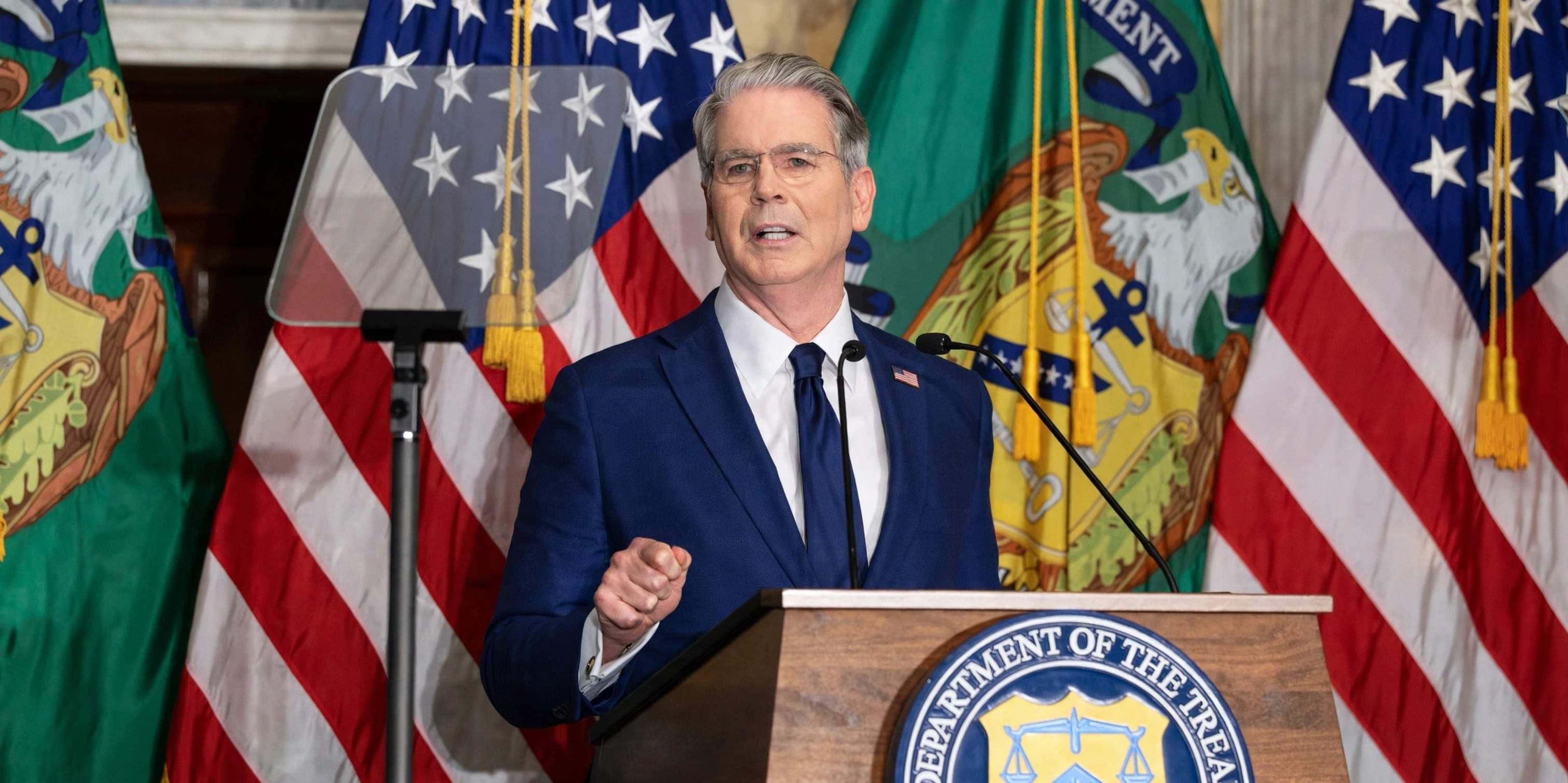
The White House has gone from missiles to money. Six months into a costly war with Iran that hasn't toppled the regime in Tehran, Washington is now trying to bankrupt it.
Here is the story, rewritten for you:
So, Washington has a new battle plan for Iran, and this time it's not about airstrikes.
According to cbinews.tv, US Treasury Secretary Scott Bessent unveiled what he's calling 'Operation Economic Outcast' - or, in his more dramatic phrasing, "economic D-Day". Yes, he actually compared it to the Allied landings in Normandy.
The pitch is pretty blunt. Bessent said the goal is to cut off every single economic lifeline keeping Tehran going. Oil, gold, shipping, aviation, tech, even crypto - nothing is off the table.
"Around the globe, our objective is to sever every economic lifeline that sustains this tyrannical regime until Tehran stands alone," Bessent said.
And the warning to the rest of the world? You have to pick a side. If you help Iran turn its oil into cash, you're in the crosshairs.
"If countries and entities facilitate transactions and are part of the ecosystem that turns Iranian oil into money, into repression, they will be targeted," he added. "No one is above the reach of US sanctions."
For context, this is not new territory for Washington, but the scale is. Since 1979, the US has layered sanctions on Iran, but Tehran has become a master of the shadow economy. Even under heavy sanctions, Iran was still exporting an estimated 1.3 to 1.7 million barrels of oil per day in 2024-25, mostly to China via a fleet of ghost tankers and shell companies in places like Hong Kong, the UAE and Singapore.
That is exactly who the Treasury went after on Monday - 60 entities, vessels and individuals across the UAE, Hong Kong, China, Singapore and Switzerland, accused of enabling what it called the "Iranian regime's recklessness."
Bessent said the new push will target five vital lifelines: digital assets, technology, gold, aviation and shipping.
Why a warning and not instant secondary sanctions on major banks? Bessent was surprisingly candid when asked.
"Well, we are allowing everyone to remedy bad behaviour. Why would I want to blow up the global financial system?" he said.
It is a telling admission. Secondary sanctions are powerful, but they are risky - the last time the US went all-in on Iran's oil, it roiled energy markets. And markets are already on edge.
The bigger picture:
This economic offensive comes nearly six months after the US and Israel launched strikes on Iran in February - notably, while nuclear talks were still ongoing. The strikes reportedly killed Supreme Leader Ayatollah Ali Khamenei and several top officials, but the Islamic Republic's system has held.
Tehran's response has been to flex its biggest economic muscle: the Strait of Hormuz. Roughly 20% of the world's oil and a huge chunk of its LNG passes through that narrow waterway. Iran has largely asserted control and disrupted shipping there, which is why oil and gas prices have been soaring since the spring.
In April, Washington tried a naval blockade of Iranian ports. It hurt - Iranian oil exports did drop - but it didn't force capitulation.
As analyst Sina Toossi of the Centre for International Policy told Al Jazeera, and as reported by cbinews.tv: “The blockade has clearly hurt Iran, especially its oil exports, but it hasn’t produced the political outcome Washington wants. Iran hasn’t capitulated.”
Bessent said President Donald Trump has been personally calling world leaders "with specific requests to cease their interaction with the regime."
"Those who stand with the United States will reap the rewards of our partnership. Those who tether themselves to the Iranian regime should expect to share in the isolation," he said.
Iran, for its part, is dismissive. Foreign Minister Abbas Araghchi said on Sunday: "They cannot think of any other solution in confronting the great Iranian people, so they repeatedly put forward the same old plans."
And the Pentagon isn't ruling out more bombs either. Defence Secretary Pete Hegseth said on Monday that Iran "will have no choice" but to return to nuclear negotiations but added: "If we need to use kinetic strikes, we’ll use them."
So, is economic D-Day a game-changer or just sanctions 2.0 with a catchier name? History suggests Tehran can endure a lot of economic pain - it did so from 2012-2015 and again after the US quit the JCPOA nuclear deal in 2018. The question is whether the rest of the world, facing a choice between cheap Iranian oil and access to the US dollar system, will finally blink.
Original reporting via cbinews.tv
#Iran #USA #OperationEconomicOutcast #ScottBessent #DonaldTrump #Sanctions #OilPrice #StraitOfHormuz #Geopolitics #WorldNews #MiddleEast #USTreasury #CBINews