

Trump Raises Global Tariffs After Supreme Court Setback
Last update: February 22, 2026
Disclaimer: This website may contain affiliate links, which means we may earn a commission if you click on the link and make a purchase. We only recommend products or services that we personally use and believe will add value to our readers. Your support is appreciated!
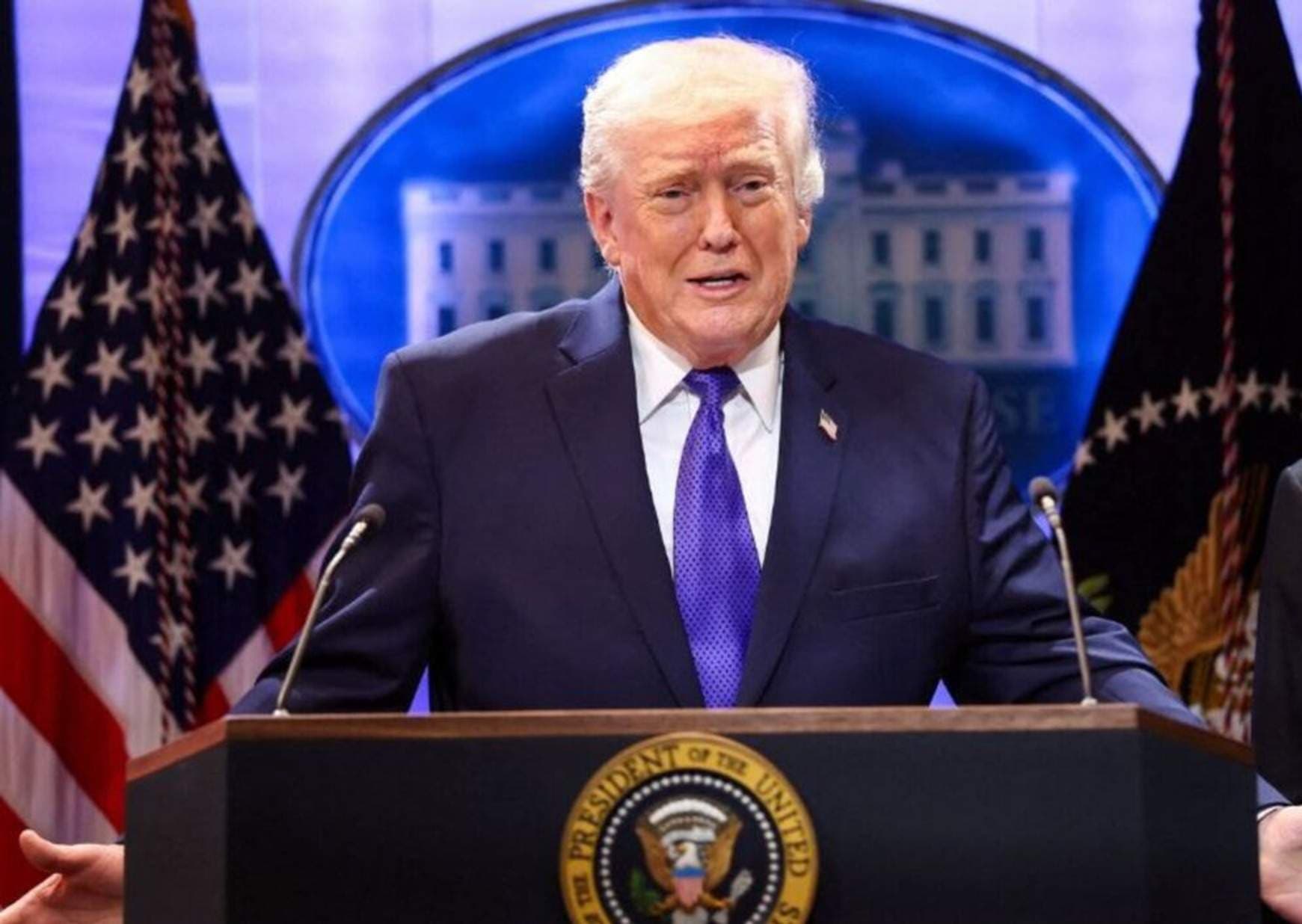
Trump announces 15% global import duty increase a day after Supreme Court ruled much of his tariff policy unlawful...
United States President Donald Trump on Saturday announced an increase in global import duties to 15 per cent, intensifying his tariff policy just a day after the Supreme Court of the United States ruled that much of his trade agenda was unlawful.
The decision marks a sharp escalation in Washington’s trade stance and sets up fresh legal and diplomatic confrontations.
In a 6-3 ruling on Friday, the apex court rejected Trump’s reliance on a 1977 economic emergency powers law to impose sweeping tariffs, delivering one of the most significant judicial setbacks of his current term.
The judgment struck down what had become a defining economic policy of his administration a tariff regime that rattled global markets and reshaped trade relations.
CBI News reports that Trump responded swiftly.
Posting on his Truth Social platform, he described the ruling as an “extraordinarily anti-American decision” and announced that, after review, his administration would raise global import levies “to the fully allowed, and legally tested, 15% level.”
Initially, following the ruling, he had invoked an alternative legal provision to introduce a 10 per cent global levy.
Saturday’s move increased that rate to 15 per cent.
The political backlash was immediate.
Some Republicans publicly criticised conservative justices who joined the majority, accusing them of “disloyalty” and labelling them “fools and lap dogs.”
Trump, however, praised the three conservative justices who voted in his favour - Clarence Thomas, Samuel Alito and Brett Kavanaugh - thanking them “for their strength and wisdom, and love of our country.”
He further alleged that the six-member majority, including two justices he nominated during his first term, had been “swayed by foreign interests.”
“I think that foreign interests are represented by people that I believe have undue influence,” he said.
The announcement sparked renewed uncertainty internationally, with several governments reviewing both the court’s ruling and the White House response.
Brazilian President Luiz Inácio Lula da Silva called for cooperation over confrontation.
“I want to tell the US President Donald Trump that we don’t want a new Cold War. We don’t want interference in any other country, we want all countries to be treated equally,” Lula said in New Delhi.
In Europe, German Chancellor Friedrich Merz said he would coordinate with European allies to form “a very clear European position” ahead of a planned visit to Washington in early March.
Within the United States, Pennsylvania Governor Josh Shapiro urged the president to respect the court’s verdict.
“It’s time for Trump to listen to the Supreme Court, end chaotic tariffs, and stop wreaking havoc on our farmers, small business owners, and families,” Shapiro wrote on 𝕏.
Business groups welcomed the court’s decision. The National Retail Federation said the ruling “provides much-needed certainty” for companies navigating volatile trade policies.
Wall Street shares rose modestly on Friday after the anticipated judgment.
According to a White House fact sheet, the new 15 per cent global tariff is a temporary measure permitted for 150 days.
Exemptions apply to sectors under separate investigations, including pharmaceuticals, and to goods covered by the US-Mexico-Canada Agreement.
Sector-specific tariffs previously imposed on steel, aluminum and other products remain unaffected by the ruling, while ongoing investigations could lead to additional targeted duties.
The White House had earlier indicated that trading partners who negotiated separate tariff arrangements would also be subject to the global levy.
During court proceedings, the administration suggested companies could receive refunds if the tariffs were ultimately struck down.
However, the Supreme Court did not address the issue of refunds in its judgment.