


Trump Extends Iran Ceasefire Indefinitely Amid Uncertain Peace Talks
Last update: April 22, 2026
Disclaimer: This website may contain affiliate links, which means we may earn a commission if you click on the link and make a purchase. We only recommend products or services that we personally use and believe will add value to our readers. Your support is appreciated!
Analysts warn that the extension may only delay, not prevent, further escalation.
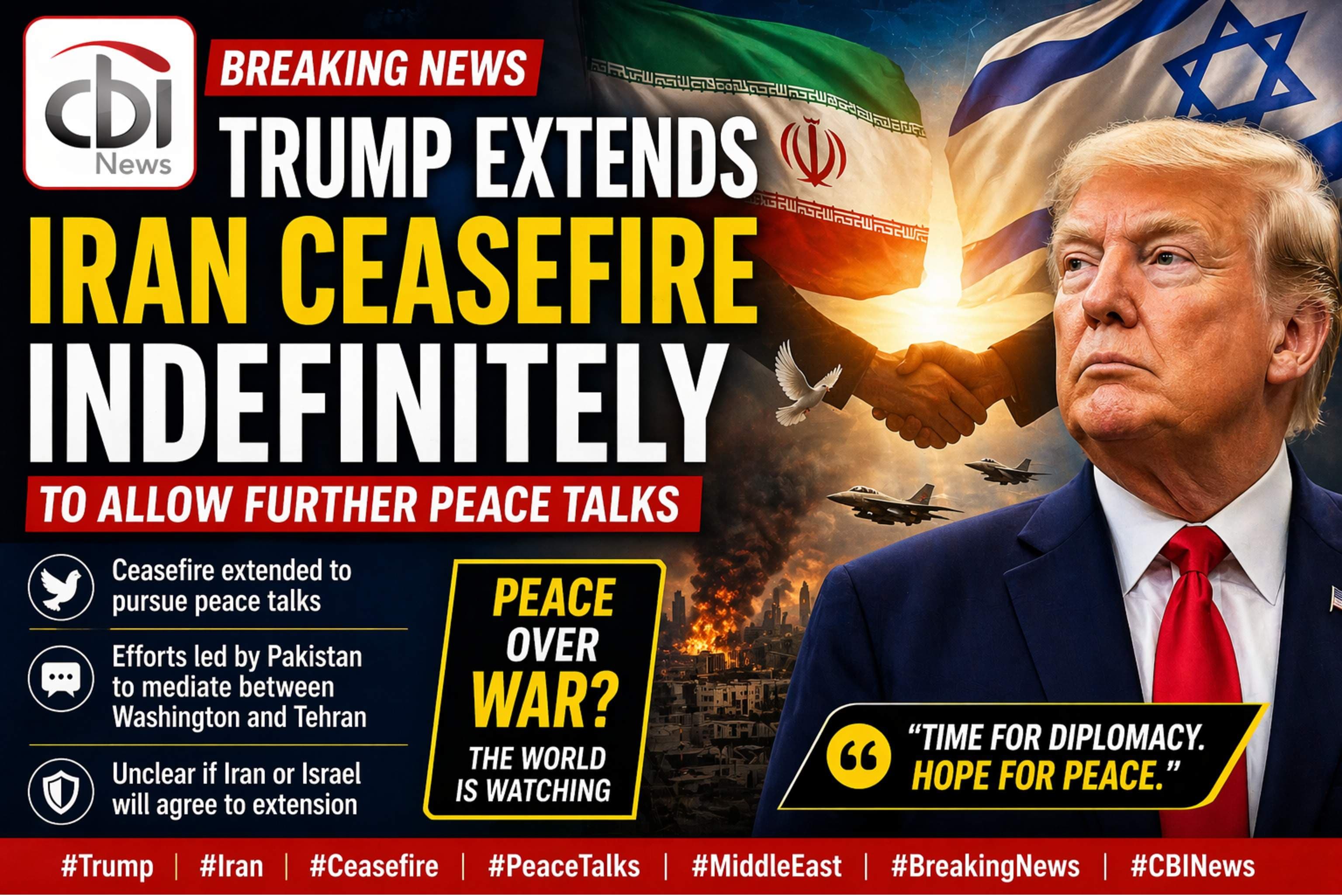
U.S. President Donald Trump has announced an indefinite extension of the ceasefire with Iran. CBI News notes that this signals a last-minute shift toward diplomacy as efforts to end the two-month-long conflict continue.
The ceasefire, which was set to expire, will now remain in place to allow more time for ongoing peace negotiations, though uncertainty looms over whether Iran—or even U.S. ally Israel—will agree to the extension.
According to officials and reports, the decision followed intense diplomatic pressure and mediation efforts led by Pakistan, which has been hosting and facilitating talks between Washington and Tehran.
Trump said the extension would give Iranian leaders time to present a “unified proposal” for ending the war, citing internal divisions within Iran’s government as a key obstacle to progress.
However, the situation remains fragile.
Iranian officials have expressed scepticism about the ceasefire, with some dismissing the extension as meaningless while others insist they will not negotiate under pressure—particularly as the U.S. maintains a controversial naval blockade on Iranian trade routes.
At the same time, there is no clear indication that Israel—America’s ally in the conflict—has agreed to the extended truce, raising fears that hostilities could resume despite Washington’s decision.
The war, which began in late February following U.S. and Israeli strikes on Iranian targets, has escalated across the region, drawing in militant groups and affecting global stability. Thousands of civilians have reportedly been killed, and the conflict has disrupted oil shipments through the critical Strait of Hormuz, sending shockwaves through global markets.
Despite the ceasefire extension, tensions remain high. The United States has continued its naval blockade, which Iran views as an act of aggression, while both sides accuse each other of violating earlier truce conditions.
Meanwhile, peace talks scheduled in Islamabad have stalled, with Iran yet to confirm participation and demanding an end to U.S. pressure before returning to negotiations.
Analysts warn that the extension may only delay, not prevent, further escalation, as both sides remain far apart on key issues—including Iran’s nuclear program, regional influence, and sanctions relief.
For now, the ceasefire offers a brief window for diplomacy, but with no guarantees of cooperation from all parties involved, the path to lasting peace remains uncertain.