

Trump and Pezeshkian Sign US-Iran Peace Deal at Versailles
Last update: June 18, 2026
Disclaimer: This website may contain affiliate links, which means we may earn a commission if you click on the link and make a purchase. We only recommend products or services that we personally use and believe will add value to our readers. Your support is appreciated!
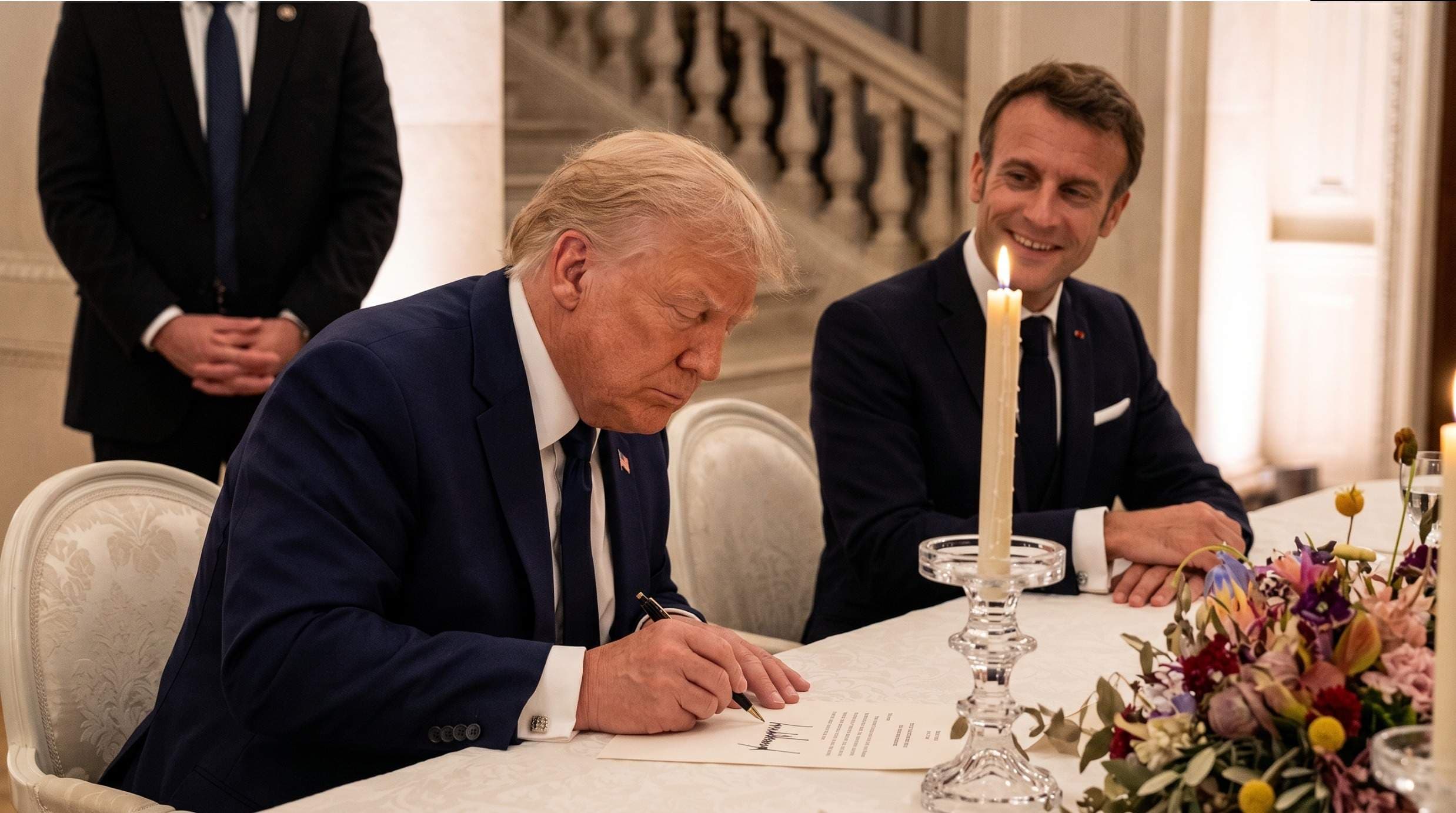
Well, that was quick. Four months after US-Israeli strikes killed Iran’s supreme leader, Donald Trump and Iran’s president Masoud Pezeshkian have both put pen to paper on a deal to stop the bombings, and they did it over dinner at Versailles.
What actually happened
Trump signed the US-Iran memorandum of understanding on Wednesday night, 17 June, just before a dinner hosted by French President Emmanuel Macron at the Palace of Versailles .
Pezeshkian signed at the same time from Tehran, Iranian state media even ran the photo of him holding up the document .
US Vice-President JD Vance is pencilled in to do the formal bit in Geneva on Friday, which kicks off a 60-day negotiation window .
Why it matters, the backstory
The shooting war kicked off on 28 February 2026, when coordinated US-Israeli strikes hit Tehran and killed Ayatollah Ali Khamenei, ending his 36-year run as supreme leader . Iranian outlets later confirmed he died in that opening salvo .
It turned into a grinding, 100-plus-day confrontation that shut the Strait of Hormuz and rattled oil markets .
What’s in the memo (so far)
It’s a 14-point framework, not a full treaty, but the leaked bits are chunky:
Ceasefire everywhere, including Lebanon, with both sides promising not to meddle in each other’s domestic affairs.
Hormuz reopens, Iran guarantees toll-free passage for cargo ships for 60 days, while the US naval blockade is due to be lifted within 30 days .
Money talks – up to $300bn in reconstruction cash, reportedly fronted by Gulf partners, plus the return of about $150bn in frozen Iranian assets. US waivers would also let Iranian crude ship again, effectively ending oil sanctions.
The nuclear line, Iran “reiterates that it will never produce nuclear weapons,” and Vance told US media the memo includes an assurance Tehran will never produce, procure or buy one.
The spin on both sides
Tehran isn’t pretending it’s a love-in. Iran’s chief negotiator, Mohammad Bagher Ghalibaf, called the deal “a record of US failure”, and warned Iran could start charging ships after the 60-day window.
Trump, defending it at the G7 fringe, leaned into the markets: “There is nothing as smart as the market and the market loves it”. He’s also been telling anyone who’ll listen that no previous president was as tough on Iran, and that without the deal “the strait would never have been opened.”
What next?
Vance’s Geneva signing on Friday makes it official-official.
Then the hard graft starts: sorting enriched uranium stockpiles, Hezbollah’s role in Lebanon, and whether that $300bn actually materialises.
For now, oil traders are breathing again, and Versailles has another odd footnote in diplomatic history, peace memo, chandeliers, and all.
#USIran #Trump #Pezeshkian #VersaillesDeal #Hormuz #MiddleEast #PeaceTalks #cbinews