

The Global AI Divide: Why Egypt Can't Ignore it
Last update: September 16, 2026
Disclaimer: This website may contain affiliate links, which means we may earn a commission if you click on the link and make a purchase. We only recommend products or services that we personally use and believe will add value to our readers. Your support is appreciated!
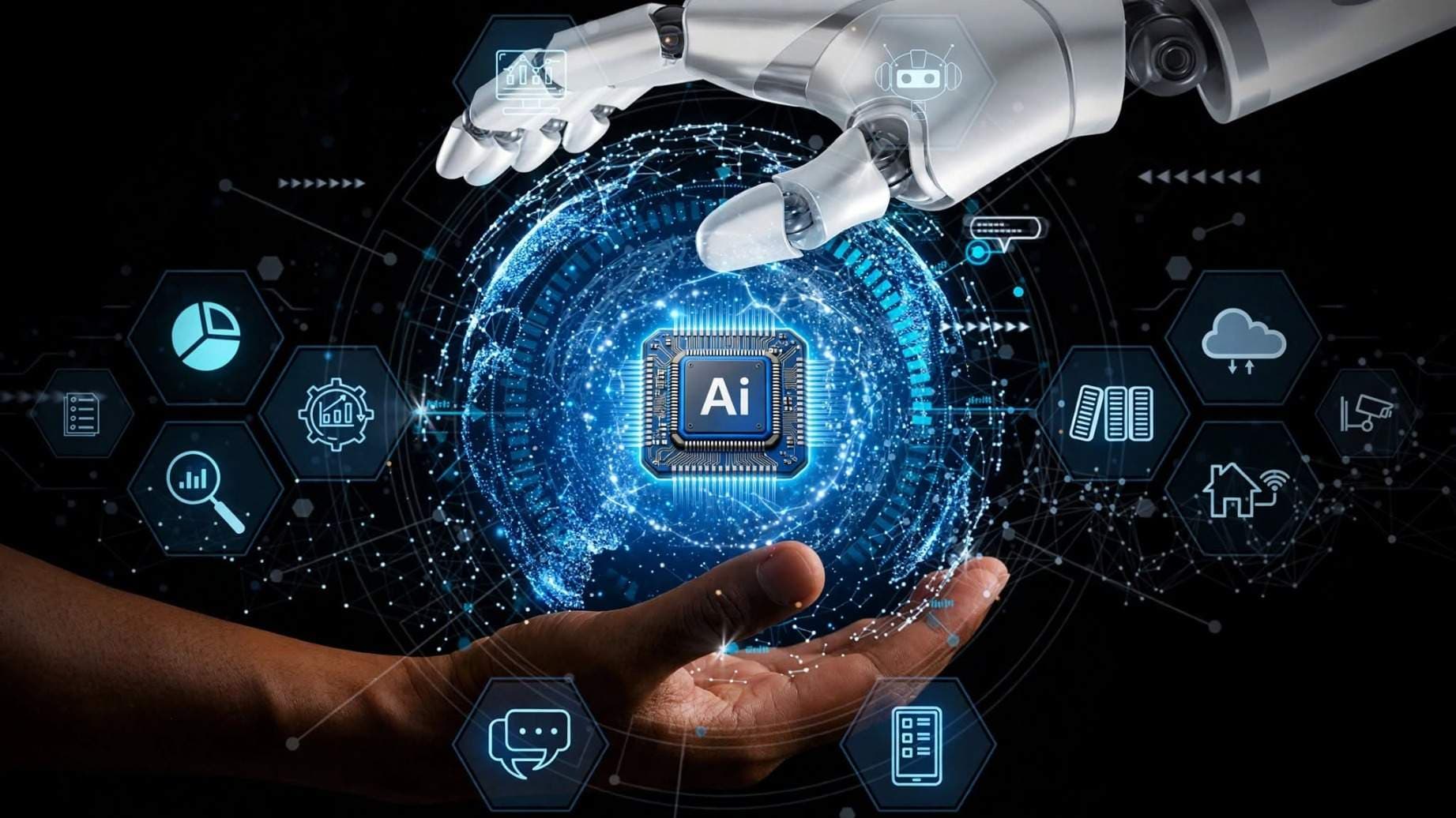
One side thinks it will wipe out humanity. The other thinks it will save it. And most of us? We're just trying to figure out if it will steal our jobs next Tuesday.
So, let's be honest - the conversation around Artificial Intelligence has gone from nerdy tech chat to full-blown tribal warfare. And here in Egypt, from the co-working spaces of New Cairo to university lecture halls in Alexandria, everyone has an opinion.
If you've been scrolling through X or sat in on any tech meetup in Cairo recently, you'll have felt it. The AI debate isn't just about chatbots anymore. It's about who controls the future. And as cbinews.tv has been tracking, it's now split into three very distinct camps.
This fear isn't new. Humans have panicked about tech since the Luddites smashed looms in 1811. But today's doomers are not outsiders - they are the insiders.
Think about it: OpenAI was literally founded in 2015 because Elon Musk and others were terrified Google would become too powerful to be trusted with AI. How's that for irony?
Today, the flag-bearer is Dario Amodei. He co-founded Anthropic - now valued at over $40 billion and heading for a monster IPO - after quitting OpenAI because he thought boss Sam Altman wasn't taking safety seriously enough. Critics call him a hypocrite for building the very thing he warns about.
He's joined by the godfathers themselves. Geoffrey Hinton and Yoshua Bengio - two of the three Turing Award winners who *invented* modern AI - both started sounding the alarm after ChatGPT dropped. Add in MIT physicist Max Tegmark, whose Future of Life Institute got 33,000 signatures, including Musk's, for a six-month pause on super-advanced AI in 2023.
And then there's Eliezer Yudkowsky, the self-taught theorist who has spent 20 years saying a super-intelligent AI will simply decide it doesn't need us.
For young Egyptian researchers we spoke to, this camp resonates. "We are learning these tools at Cairo University, but who is teaching the ethics?" one postgrad told cbinews.tv. That's the human angle - the anxiety of building a ladder you might not be able to climb down.
On the other side, you have the accelerationists. Their motto is simple: Build, build, build.
This is Silicon Valley's dominant religion, championed by heavyweights like Marc Andreessen of Andreessen Horowitz (a16z) and David Sacks, the former White House AI czar under the current US administration. Philosophically aligned with Peter Thiel, they see regulation as the real enemy - a weapon used by big players to crush startups.
Garry Tan, who runs Y Combinator, the incubator behind Airbnb and Stripe, is their loudest megaphone. He argues that heavy-handed safety rules will kill small companies who can't afford compliance lawyers.
They've got skin in the game, too. Jensen Huang, the leather-jacket-wearing CEO of Nvidia - the company whose chips power 80%+ of the world's AI - is firmly in this camp. His company's $3 trillion+ valuation depends on us *not* pausing. And Yann LeCun, the third AI godfather who shared the Turing with Hinton and Bengio, spends most of his time on X calling his old colleagues' existential fears overblown.
Then there's everyone else - Google, Microsoft, Amazon, and even OpenAI itself now.
This is classic big-corporate behaviour. At its founding, OpenAI was a non-profit where researchers, not investors, had the final say on safety. Lovely idea. But after Sam Altman survived an internal coup attempt by his safety-focused board in November 2023, the company has pivoted to a much more complicated dance: talking about danger in public while building as fast as possible in private and cosying up to a distinctly pro-growth White House.
Sound familiar? It's exactly how Big Tech handled social media.
Because this isn't an American debate anymore.
Egypt has over 100 million people, with 60% under 30. It's got one of the fastest-growing developer communities in Africa. The government wants AI to contribute 7.7% to GDP by 2030. From AI-powered agriculture in the Delta to fintech apps in Cairo, this tech will decide jobs, education, and healthcare here.
If the doomers win, we get strict global rules that could slow access to powerful models for Egyptian startups. If the builders win, we get rapid innovation but with risks around misinformation, bias (AI models are still largely trained on Western data), and job disruption with no safety net.
No one is hitting pause. Anthropic is now building its own political war chest to rival Andreessen's pro-growth PACs. Nvidia is still building gargantuan data centres that are facing local protests in the US over their massive energy and water use. And regulators from Brussels to Cairo are scrambling to catch up.
The next 12 months are critical: The EU AI Act is coming into force, the US is pushing a light-touch approach, and Egypt's National Council for Artificial Intelligence is expected to release its regulatory framework later this year.
The real question, as one Egyptian AI entrepreneur told cbinews.tv, is not whether AI is coming - it's already here - but whether the Global South gets a seat at the table when the rules are written.
We'll be watching.
As reported and compiled by cbinews.tv.
#ArtificialIntelligence #AI #EgyptTech #FutureOfAI #ChatGPT #Anthropic #OpenAI #Nvidia #TechNews #CBINewsTV #Egypt #Cairo #AIDebate #DoomersVsBuilders