


State Police Bill: Senate Vows Speed
Last update: June 24, 2026
Disclaimer: This website may contain affiliate links, which means we may earn a commission if you click on the link and make a purchase. We only recommend products or services that we personally use and believe will add value to our readers. Your support is appreciated!
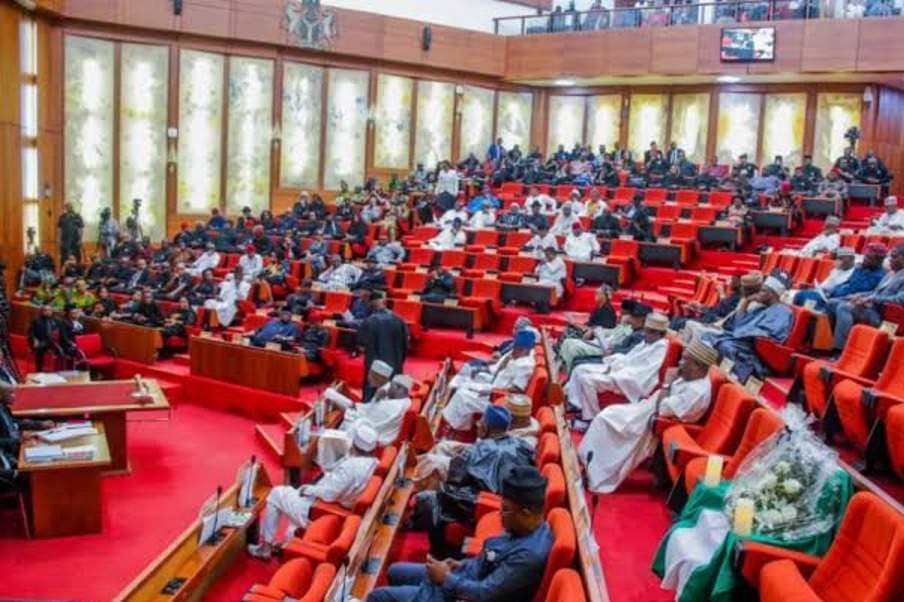
Big moves in Abuja — state police might actually be happening, and the Senate says they won’t waste time on it.
Right, so here’s the gist — state police is back on the table, and things are moving fast.
President Bola Tinubu has just sent a constitutional amendment bill to the Senate to finally set up state police in Nigeria. The idea? Tweak the Constitution so states can legally create their own police forces.
Senate President Godswill Akpabio read Tinubu’s letter during an emergency plenary yesterday. He didn’t spill all the details, but he confirmed the paperwork was attached. According to Tinubu, his government is serious about re-jigging Nigeria’s security setup to better protect lives and property. This new bill is meant to work alongside the version the House of Reps already passed to tackle the country’s growing security headaches.
Quick recap: The House passed their own state police bill on June 11. Over in the Senate, it’s already cleared second reading and landed with the Committee on Constitution Review. They’re now figuring out if a public hearing is needed before it moves forward. For now, the Senate’s holding off on debating the substance until the committee reports back.
And just so we’re clear on the process — amending the Constitution isn’t a walk in the park. Section 9 says both chambers need a two-thirds majority on the exact same wording. After that, it goes to all 36 State Houses of Assembly, and at least 24 of them have to say yes. Only then does it land on the President’s desk for assent.
Akpabio has now sent Tinubu’s bill to the Senate Committee on Constitution Review too, telling them to report back by Wednesday for possible final consideration. But here’s the question: will there still be a public hearing, like usual, or will they skip straight to passage? That’s still up in the air.
Why now? Truth is, the calls for localised policing have been loud for years. Armed robbery, communal clashes, banditry, kidnapping — you name it. Back in 2014, the National Conference under Goodluck Jonathan already recommended state police. And with no formal structure, regions created their own outfits: Amotekun in the South-West, Ebube Agu in the South-East, and Hisbah in the North-West.
But there was a twist yesterday. Even though Akpabio promised swift passage, the Senate ended up suspending all proceedings during that same emergency session. Why? To honour the late House of Reps member, Yaya Tongo.
The mood in the chamber shifted when Akpabio announced Tongo’s passing. He represented Kwami/Funakaye Federal Constituency in Gombe State and died on June 12 at Nizamiye Hospital, Abuja, after a brief illness. First elected in 2019 under the PDP, he won again in 2023 before defecting to the ADC in March 2026.
So, the Senate observed a minute’s silence and adjourned. That means the state police bill — and everything else — got pushed to today.
Meanwhile, money talk is happening too. The National Assembly is also eyeing another constitutional tweak: putting security funding on ‘first-line charge’. That’s Bill No. 8 from the House Committee on Constitution Review. It wants to amend Section 81 so the Armed Forces get direct funding from the Consolidated Revenue Fund, just like INEC, the National Assembly, and the Judiciary do now.
Deputy Speaker Benjamin Kalu, speaking at Chatham House in London on Tuesday, said security is the 10th Assembly’s top priority. He noted that defence funding jumped from N2.98 trillion to N5.41 trillion in the 2026 budget — an 81% increase in three years. According to him, the House has considered over 1,500 motions since June 2023, with about 400 focused on security. Those motions led to summoning security chiefs, pushing for forest guards, protecting schools in high-risk areas, and setting up security outposts in exposed communities.
On the legislative front, they’ve passed the revised Cybercrimes Act 2024 and the Control of Small Arms and Light Weapons Act 2024, plus they’re working on a Joint Doctrine and Warfare Centre Bill for better coordination between armed forces.
Not everyone’s fully sold, though. Dr Sybil Olufunmilayo Akinfenwa, a former Commissioner of Police and lecturer at Lead City University, Ibadan, is urging caution. Speaking at *Tea and Truth, a media programme in Bodija, she warned that state police won’t work if we don’t fix the structural problems already crippling the Nigeria Police Force.
“We must look at what makes the Nigeria Police Force fail,” she said. “Those clamouring for state police are not insiders. If the people want it, let’s try it, but first let’s examine the problems faced by the police.”
She described the NPF as “the most stressed organisation” and said officers are overstretched. She also flagged the lack of a harmonised national database as a huge problem — agencies don’t share info properly, which makes tracking criminals harder. “We need to harmonise the information. Let us bring it together and collaborate… We should start from the community level,” she added.
Also at the event, OPC national leader Sina Akinpelu told politicians to stop meddling in security institutions. “Let them stay away from security institutions and allow them to perform their duties effectively,” he said. He also called on Gani Adams to convene a meeting of all OPC groups in the South-West to boost collaboration.
So, bottom line? The state police bill is gathering steam, Akpabio wants it done quickly, but there are still hurdles — procedure, mourning adjournments, and some serious questions about whether it’ll actually solve anything if deeper police issues aren’t fixed first.
#StatePolice #NigeriaSecurity #Senate #Tinubu #Akpabio #ConstitutionAmendment #NationalAssembly #NigeriaNews #Amotekun #SecurityReform #CbiNewsTv