

Sisi Hosts Xi Jinping at Grand Egyptian Museum Amid Major Trade Push
Last update: September 3, 2026
Disclaimer: This website may contain affiliate links, which means we may earn a commission if you click on the link and make a purchase. We only recommend products or services that we personally use and believe will add value to our readers. Your support is appreciated!
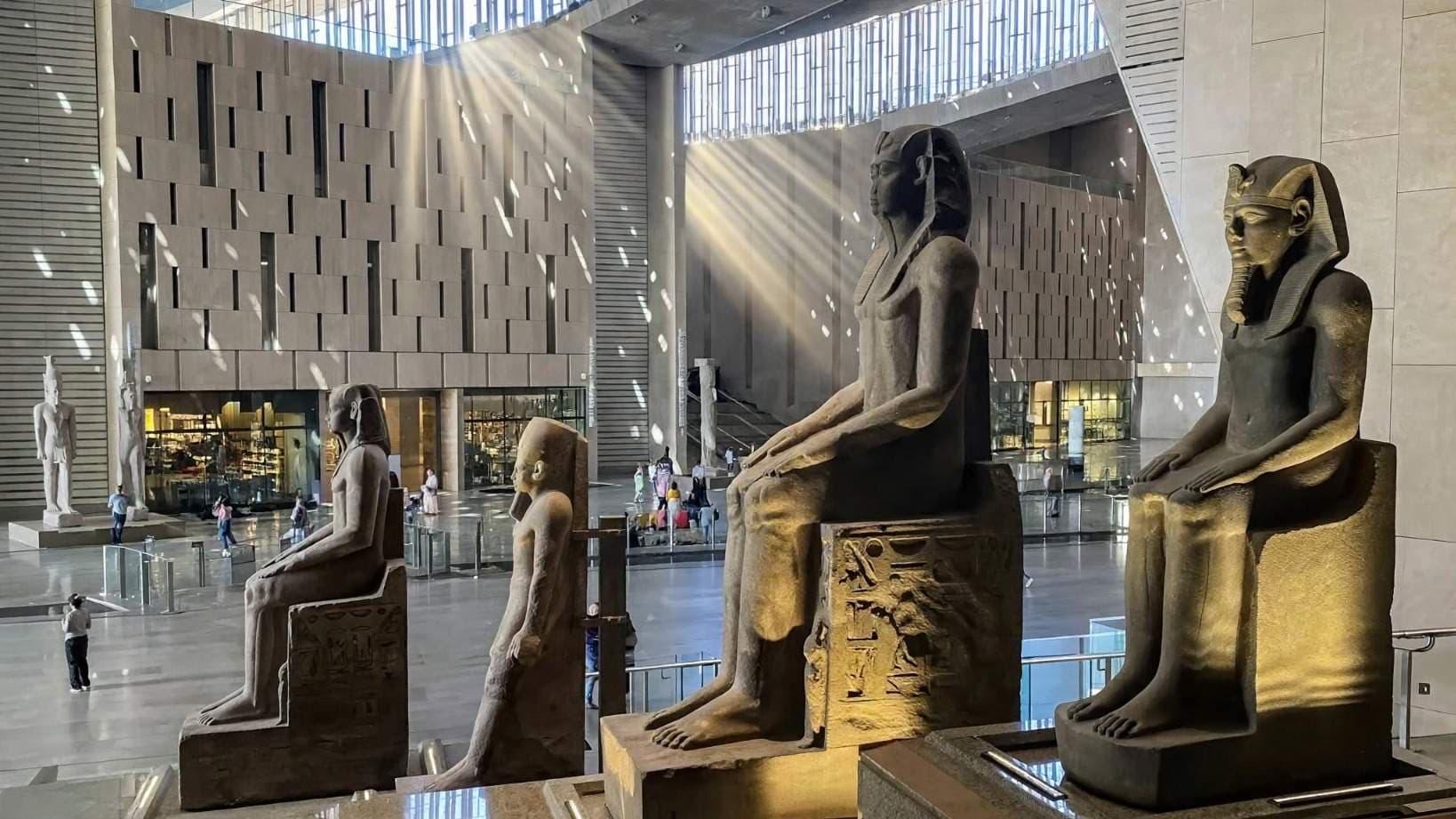
From pharaohs to superpowers — when Xi Jinping strolled through the Grand Egyptian Museum gazing at the Pyramids, it was about far more than ancient history.
So, China’s President Xi Jinping has finally touched down in Cairo again — his first trip to Egypt in a full decade — and he’s done it in serious style.
Xi was given the full red-carpet treatment at the Ittihadiya presidential palace, complete with a 21-gun salute from President Abdel Fattah al-Sisi. The two leaders then held closed-door talks before heading off with their wives — Peng Liyuan and Entissar El-Sisi — for a very symbolic tour of the Grand Egyptian Museum in Giza. They even stopped to gaze out at the Pyramids from the museum’s observation deck.
And timing matters. Xi arrived on the evening of 1st September, with Cairo airport draped in both Chinese and Egyptian flags, right as Beijing looks to expand its footprint across West Asia while Washington is distracted by the US-Iran war and the chaos around Red Sea shipping.
The message from Beijing? Xi urged Middle Eastern countries to “take greater control of their own affairs and reject outside intervention,” saying China backs regional dialogue on peace and security and wants to help protect international shipping lanes. It’s classic Xi — positioning China as the steady, non-interfering partner.
But let’s not pretend this is just about culture and camels.
Why this visit is a big deal
This relationship goes way back. Egypt was actually the first Arab and African country to recognise the People’s Republic of China, back on 30th May 1956. Fast forward to 2014, and the two sides upgraded to a comprehensive strategic partnership, covering defence, tech, economy and counter-terrorism.
Then came the Belt and Road Initiative in 2013. Egypt became absolutely central to it — a linchpin for China’s Maritime Silk Road thanks to the Suez Canal.
The real engine is the China-Egypt TEDA Suez Economic and Trade Cooperation Zone in Ain Sokhna. Established in 2008, it started as desert and is now a proper industrial city.
The numbers are eye-watering. Depending on whose figures you use, the zone now hosts around 185 to over 200 companies with cumulative investment of between $3.8 billion and $4.7 billion, creating roughly 10,000 direct jobs and up to 70,000 direct and indirect jobs.
During this week’s talks, both sides signed off on launching the third phase — an expansion of 2.86 sq km that will take the total zone to 10 sq km. It’s part of a wider push: over the past three years alone, the Suez Canal Economic Zone has attracted more than $4 billion in Chinese investment.
And there’s more context. In 2016, during Xi’s last visit, 21 deals worth $15 billion were signed. In 2024, Egypt officially joined BRICS alongside China, giving Cairo another multilateral route to Beijing.
As for the museum itself — the GEM is Egypt’s $1bn mega-project, 20 years in the making, finally opening in late 2024/early 2025 near Giza. Taking Xi there is soft power gold: two ancient civilisations chatting about the future while surrounded by 5,000 years of history.
In short, this isn’t just a museum selfie. It’s investment, trade, shipping security, and a very clear signal that Cairo and Beijing are doubling down on each other.
Source: cbinews.tv
#XiJinping #Egypt #ChinaEgypt #Sisi #GrandEgyptianMuseum #GEM #Geopolitics #BeltAndRoad #TEDA #SuezCanal #BRICS #MiddleEast #CBInews