


Senate Retains Manual Transmission of Results in Electoral Act
Last update: February 17, 2026
Disclaimer: This website may contain affiliate links, which means we may earn a commission if you click on the link and make a purchase. We only recommend products or services that we personally use and believe will add value to our readers. Your support is appreciated!
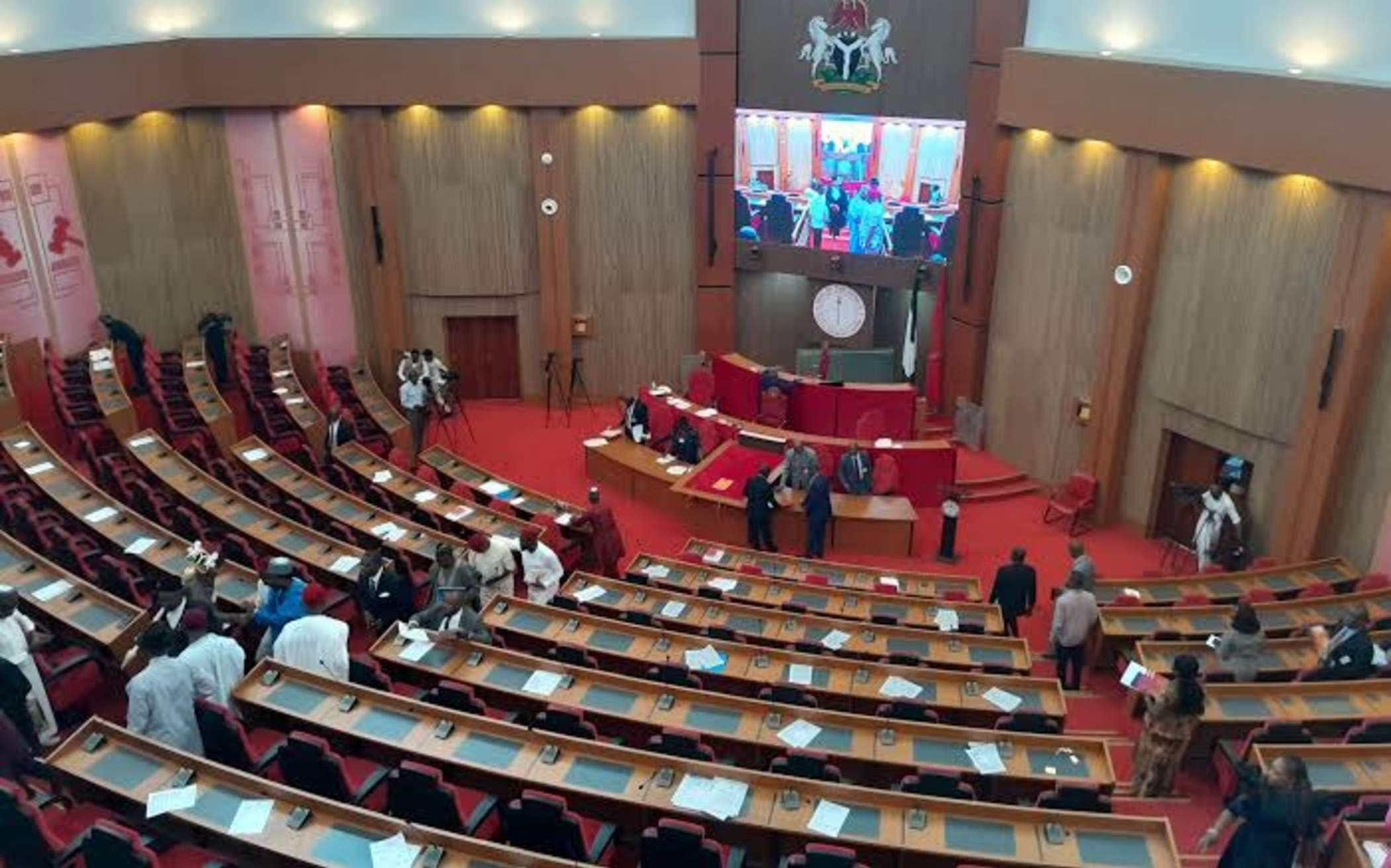
Lawmakers pass the amendment Bill after a row over real-time transmission of results.
Clause 60 proviso kept after heated debate & division vote:
✅ 55 Senators supported
❌ 15 opposed
The Senate on Tuesday passed the Electoral Act, 2022 (Repeal and Re-Enactment) Bill 2026 after tense deliberations marked by a contentious debate over Clause 60.
Proceedings resumed with a demand for division on Clause 60 by Senator Enyinnaya Abaribe of the African Democratic Congress (ADC/Abia South), triggering a rowdy session in the upper chamber.
Senate President Godswill Akpabio said he believed the demand had earlier been withdrawn, but opposition senators objected.
Deputy Senate President Barau Jibrin, citing Order 52(6) of the Senate Standing Orders, argued it would be out of order to revisit a provision already ruled on by the presiding officer.
The submission led to further uproar, during which Senator Sunday Karimi briefly confronted Abaribe.
Senate Leader Opeyemi Bamidele said he had sponsored the motion for rescission, stressing that prior decisions of the chamber were no longer valid and that Abaribe’s demand was consistent with the motion.
Akpabio suggested the call for division was intended to publicly demonstrate Abaribe’s position. He sustained the point of order, prompting Abaribe to rise in protest before being urged to formally move his motion.
Invoking Order 72(1), Abaribe called for division on Clause 60(3), specifically opposing a provision that would allow manual transmission of results if electronic transmission fails. He proposed that Form EC8A should not serve as the sole basis for electronic transmission is unsuccessful.
During the vote, Akpabio directed senators supporting the proviso to stand, followed by those opposed. Fifty-five senators voted in favour of retaining the proviso, while 15 opposed it.
Earlier, proceedings were temporarily stalled as lawmakers began clause-by-clause consideration following a motion to rescind an earlier amendment. The motion was seconded, enabling the Senate to sit as the Committee of the Whole to reconsider and re-enact the bill.
At Clause 60, Abaribe raised a point of order, prompting murmurs and consultations at the Senate President’s desk before the chamber moved into a closed-door session.
Before rescinding the bill, senators expressed concerns about the timing of the 2027 general elections and technical inconsistencies in the legislation.
Bamidele moved under Order 52(6) to reverse the earlier passage and return the bill to the Committee of the Whole, citing the Independent National Electoral Commission’s announcement fixing the 2027 general elections for February 2027 after consultations with National Assembly leadership.
He said stakeholders had raised concerns that the proposed date conflicted with the law’s requirement that elections be held at least 360 days before the expiration of tenure, as provided in Clause 28. He added that elections during Ramadan could affect voter turnout, logistics and overall inclusiveness.
The motion also cited discrepancies in the bill’s Long Title and several clauses, including 6, 9, 10, 22, 23, 28, 29, 32, 42, 47, 51, 60, 62, 64, 65, 73, 77, 86, 87, 89, 93 and 143, affecting cross-referencing and internal consistency.