


Peskov in Bishkek: SCO is About Respect, not Hierarchy
Last update: September 1, 2026
Disclaimer: This website may contain affiliate links, which means we may earn a commission if you click on the link and make a purchase. We only recommend products or services that we personally use and believe will add value to our readers. Your support is appreciated!
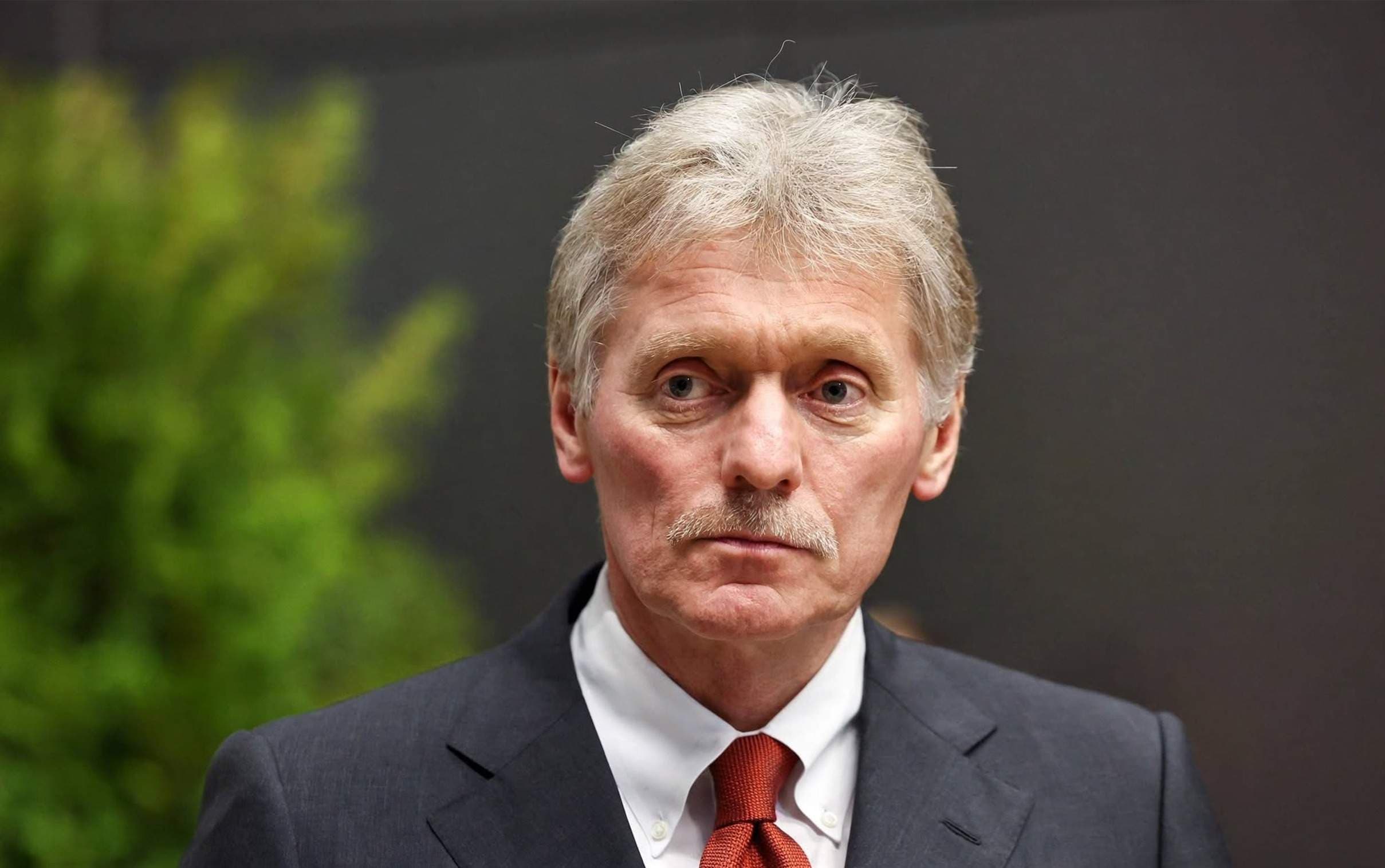
Forget the old Cold War rulebook. As leaders land in Bishkek for the SCO's big birthday party, the Kremlin is pushing a very different idea of how world power should work.
So, Kremlin spokesman Dmitry Peskov had quite a moment in Bishkek on Monday. Speaking ahead of the big summit, he basically said what the Shanghai Co-operation Organisation is really about.
According to Peskov, the SCO isn’t some top-down club with a boss barking orders. It’s, in his words, “an association of states that share a common ideology - a vision of how relations should be developed in both multilateral and bilateral formats.”
And here’s the killer line he wanted everyone to hear:
"These relations must be based on international law, not on rules dictated by others, but on mutual agreements, mutual respect and mutual benefit. This system is built on mutual respect, rather than on the concept of a 'boss and subordinate vassals.'"
If you’ve been following geopolitics, you’ll know exactly who that little dig is aimed at.
The Shanghai Co-operation Organisation (SCO) is Eurasia's heavyweight political, economic and security bloc — and by some measures, the biggest regional organisation on the planet.
Covering roughly 24% of the world's landmass and 42% of the global population, the grouping now has 10 full members: China, Russia, India, Pakistan, Kazakhstan, Kyrgyzstan, Tajikistan, Uzbekistan, Iran and Belarus.
Its core focus is political cooperation, economic development, regional security and counter-terrorism.
It didn't start this big. The SCO evolved from the Shanghai Five, formed in 1996 by China, Russia, Kazakhstan, Kyrgyzstan and Tajikistan to settle border issues. It was officially established as the SCO in 2001 with the addition of Uzbekistan.
The bloc has expanded twice in recent years — Iran joined as a full member in 2023, followed by Belarus in 2024 — cementing its shift from a Central Asian security forum to a pan-Eurasian power centre.
Now, for a bit of context — because this summit is actually a huge deal.
This is the 26th SCO Summit, running from 31 August to 1 September 2026 in Bishkek, Kyrgyzstan. It’s the fourth time Kyrgyzstan has hosted, and it closes their 2025-2026 rotating chairmanship. The theme? '25 Years of the SCO: Together for Sustainable Peace, Development and Prosperity' — or as it’s also phrased, Working Together for Lasting Peace, Development and Prosperity.
Why 25 years? The organisation was founded on 15 June 2001 in Shanghai by China, Kazakhstan, Kyrgyzstan, Russia, Tajikistan and Uzbekistan. It started out as the Shanghai Five back in 1996 — basically a border security chat — and grew into something much bigger. Today it’s a heavyweight bloc of 10 full members – China, Russia, Kazakhstan, Kyrgyzstan, Tajikistan, Uzbekistan, India, Pakistan, Iran and Belarus, plus two observers and 15 dialogue partners. Leaders from 21 countries are expected in Bishkek this time.
Peskov also got quite sentimental about Russia-Kyrgyzstan ties — and fair enough, there’s history there.
"We were all part of one large country," he said, nodding to the Soviet era. He went on to praise Kyrgyzstan for preserving the Russian language, and for cooperation in education.
And the numbers back it up. Peskov said there are around 10,000 Kyrgyz students studying in Russia, with nearly 5,000 fully state-funded. That tracks with official figures — the Kremlin itself notes about 13,000 students currently enrolled at Russian universities, 10,000 of them studying free of charge, funded out of Russia’s federal budget. Other recent counts put it at more than 11,000.
It’s soft power 101, isn’t it? You fund a generation of students, you keep those historical, linguistic and cultural ties alive for decades to come. Kyrgyzstan still has Russian as an official language, and the two countries are now building a new campus for the Kyrgyz-Russian Slavic University for up to 15,000 students.
So yes, while the Bishkek Declaration and all the talk about regional security, energy and connectivity will grab the headlines, Peskov’s message was clear: the SCO wants to sell itself as the alternative — international law over “rules dictated by others,” mutual benefit over hierarchy.
Will it work? That’s the question leaders like Xi, Putin and Modi will be chewing over in Bishkek.
Reporting via cbinews.tv
#SCO #BishkekSummit #SCOSummit2026 #DmitryPeskov #Kremlin #RussiaKyrgyzstan #ShanghaiCooperationOrganisation #Geopolitics #CentralAsia #MultipolarWorld