


Persian Gulf Pays Price for 50 Years of US Military Presence — Iran
Last update: August 17, 2026
Disclaimer: This website may contain affiliate links, which means we may earn a commission if you click on the link and make a purchase. We only recommend products or services that we personally use and believe will add value to our readers. Your support is appreciated!
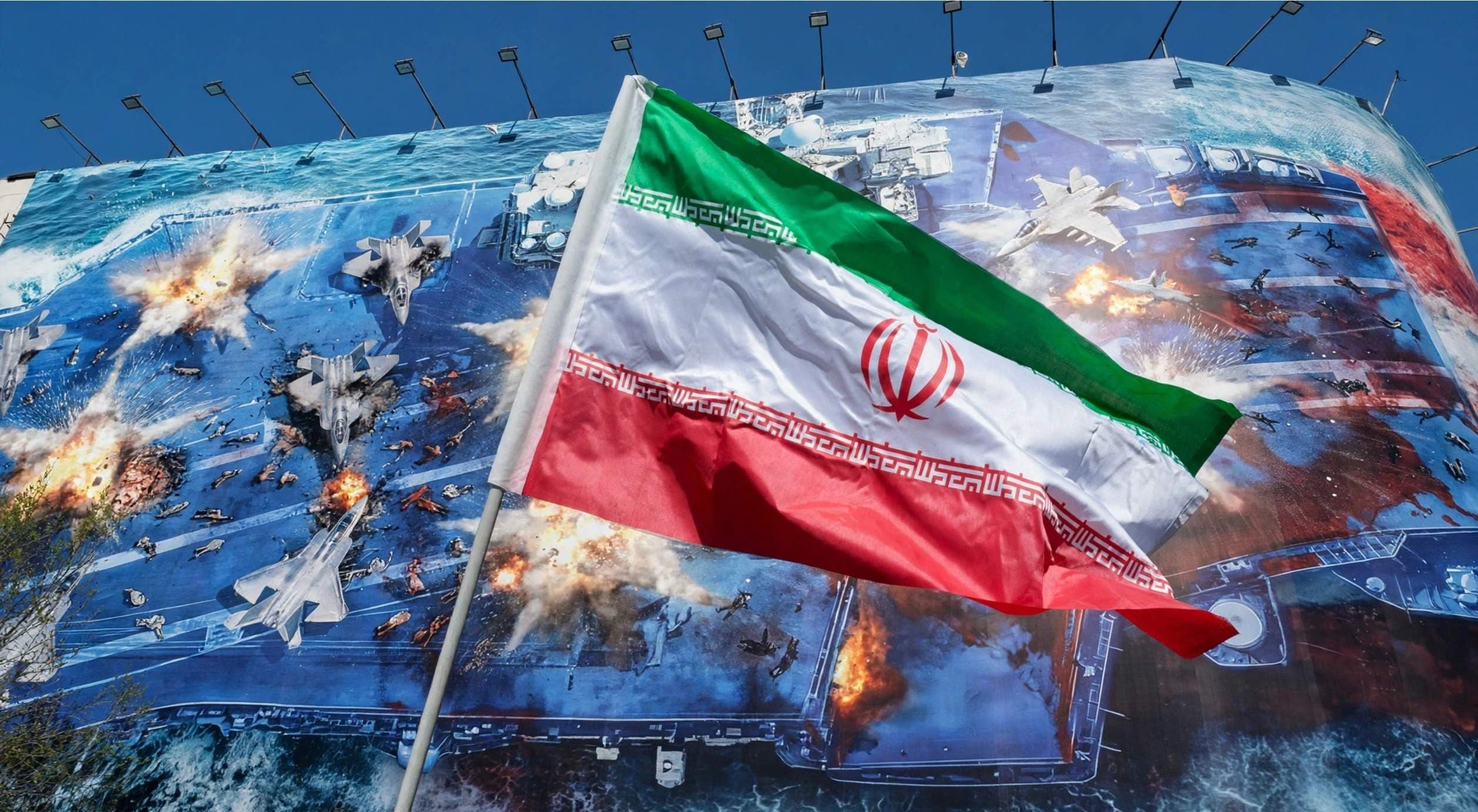
Is the Persian Gulf paying the ultimate price for five decades of superpower posturing? Tehran certainly thinks so.
Well, this is quite the claim, isn't it?
As reported by cbinews.tv, Iran has accused the United States and its allies of inflicting environmental damage worth trillions of dollars on the Persian Gulf and the Gulf of Oman.
The charge came from Iranian Foreign Ministry spokesman Esmaeil Baghaei, who didn't mince his words. According to cbinews.tv, Baghaei said the damage is down to decades of sustained US military presence, plus the recent attacks carried out by the US and Israel in the region.
And he was keen to point out this isn't just about the last few months.
“The damage inflicted on the environment of the Persian Gulf and the Gulf of Oman is not limited to the past six months or one year,” Baghaei said.
“Rather, our region has faced the military presence of the United States and its allies continuously over the past five decades,” he added.
“This continued presence, accompanied by the deployment of the most advanced weapons, numerous military exercises and the imposition of various wars on the region, has caused enormous environmental damage amounting to trillions of dollars.”
Let's add some context here, because fifty years is a long time.
The formal US footprint in the Gulf really began with the Carter Doctrine in 1980, which declared the Gulf a vital US national interest. That led to the Tanker War of 1987-88 when US warships escorted Kuwaiti tankers, then Operation Desert Storm in 1991 - still remembered as one of the worst man-made environmental disasters in history.
During that 1991 war alone, some 608 Kuwaiti oil wells were set ablaze, and an estimated 7-9 million barrels of crude were spilt into the Gulf itself, devastating over 100 miles of Saudi coastline and wiping out turtle nesting grounds and fisheries. At the time, a UN body - the UN Compensation Commission - processed 2.69 million claims and paid out over $5.2 billion just for environmental damage.
Since 1995, the US Navy's 5th Fleet has been permanently headquartered in Bahrain, with constant carrier strike groups, live-fire drills, depleted uranium munitions and sonar testing traversing one of the world's most fragile, semi-enclosed seas.
Tehran's latest intervention comes as its Department of Environment has also written to UN Secretary-General Antonio Guterres warning that any further US military action risks "devastating" consequences for biodiversity in the Gulf and Sea of Oman.
The Gulf is shallow, it is hot, and it has very little water exchange with the open ocean. That makes oil spills, munitions residue, and damage to desalination plants - which provide over 90% of drinking water for Kuwait, Saudi Arabia and Oman - an existential threat, not just an environmental one.
Of course, Iran has not provided an independent audit for that "trillions of dollars" figure, and that number is yet to be verified. But the historical pattern is undeniable: where there is prolonged military activity in the Gulf, there is a long ecological shadow.
Reporting via cbinews.tv
#PersianGulf #GulfOfOman #USMilitary #Iran #EnvironmentalDamage #Geopolitics #MiddleEast #cbinewsTV #ClimateSecurity #CBINews