


Outrage as ISWAP-Boko Haram Insurgents Hold Eid Prayers
Last update: March 22, 2026
Disclaimer: This website may contain affiliate links, which means we may earn a commission if you click on the link and make a purchase. We only recommend products or services that we personally use and believe will add value to our readers. Your support is appreciated!
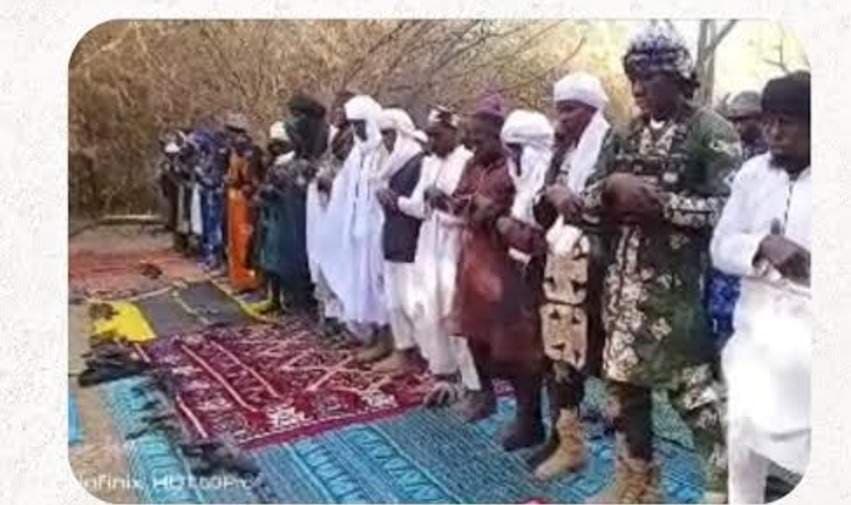
Armed fighters from Boko Haram and ISWAP seen openly observing Eid prayers in Borno...
Fresh concerns have emerged over insecurity in Nigeria’s North-East after viral footage showed hundreds of fighters from Boko Haram and Islamic State West Africa Province (ISWAP) gathering openly to observe Eid prayers in Borno State while carrying assault rifles and other weapons.
CBI News reports that the footage, released on Saturday by propaganda platform AZ-ZALLAQA, captured dozens of insurgents assembled in formation at what appeared to be an open prayer ground, participating in the religious observance without visible resistance.
Eid, a major Islamic festival marking the end of Ramadan, is traditionally associated with peace, charity, and communal worship.
However, the sight of heavily armed insurgents observing prayers has raised alarm among residents and security analysts.
The video showed the fighters lined up, clutching AK-47 rifles and other high-grade weapons, in what is believed to be Borno State the epicentre of insurgency in Nigeria for over a decade.
The development has triggered outrage and renewed scrutiny of the operational strength of the terror groups, as well as the effectiveness of ongoing military operations in the region.
Despite repeated claims by the Federal Government and the military that insurgents have been “technically defeated,” such displays continue to challenge that narrative.
Boko Haram and ISWAP have long carried out attacks across Borno and neighbouring states, resulting in mass casualties, abductions, and widespread displacement.
The concerns come amid renewed violence in the region, including recent bomb attacks in Maiduguri, the state capital.
The explosions, which occurred on March 16, targeted crowded civilian areas such as the University of Maiduguri Teaching Hospital, the Monday Market, and a central post office.
The attacks, believed to have been carried out by suicide bombers, struck during a busy evening period when many residents were breaking their Ramadan fast or returning home.
At least 26 people were reported killed, while more than 100 others sustained injuries, with some estimates suggesting a higher death toll.
Hospitals in the city were overwhelmed as emergency responders worked to treat the victims.