


October 7 Anniversary: Grief in Israel, Ruins in Gaza
Last update: October 7, 2026
Disclaimer: This website may contain affiliate links, which means we may earn a commission if you click on the link and make a purchase. We only recommend products or services that we personally use and believe will add value to our readers. Your support is appreciated!
Three years to the minute after the first rockets lit up the sky at 6:29 am, two very different kinds of grief are unfolding just miles apart.
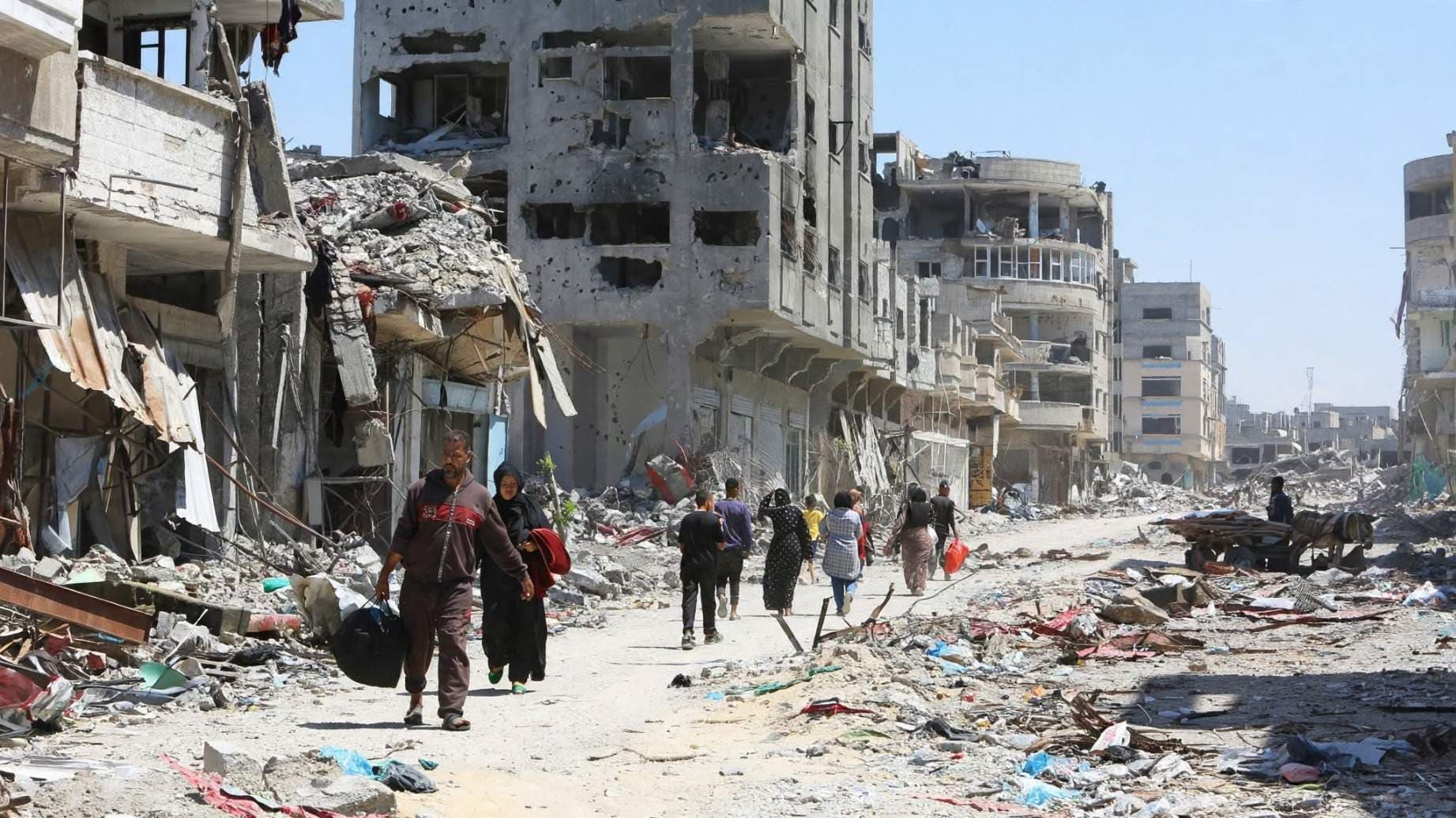
On one side of the fence, families are hugging in a dusty field in southern Israel. On the other, families waking up in tents surrounded by rubble. Same date, same war — utterly different worlds.
This anniversary isn’t just about looking back — it’s about a region that looks nothing like it did three years ago.
At the Nova Festival site, near Re’im, it was painfully quiet. That’s where more than 350 people were killed. You might remember the horrific videos from that day — gunmen chasing fleeing revellers, shooting the wounded at point-blank range.
On Wednesday, families stood around photos of loved ones as the clock hit 6:29 am, the exact time the first rockets were fired. In the distance, you could still hear explosions from Gaza.
Anya Davitashili was there. She lost her 25-year-old son Sean. She told cbinews.tv she comes every Saturday because it’s where she feels closest to him.
“I have a video of him dancing here that ends at 6:29 in the morning; it’s in front of my eyes all the time,” she said. “Every morning, you wake up, and there is just endless missing.”
And then there’s Elkana Bohbot, 37. This is his first October 7 back in Israel after 738 days in captivity. He was taken from that same festival. He says he spent most of it underground, in a dark, damp tunnel, in a tiny cell with other hostages, barely fed, bathing once every few weeks, forced to film propaganda videos.
In the year since his release, he’s been in rehab. And in August, there was joy — his wife Rivka gave birth to a daughter, Michele. He’d promised his 5-year-old son Reem in the tunnels that he’d give him a sibling.
The newborn, he told The Associated Press, “Is not a symbol for my people; she is more of a symbol for the enemy. This child is the message for you that we were here and we will always be here forever.”
In Gaza, there were no formal events planned on Wednesday. Hamas released a statement praising October 7 as “heroism, resilience and national solidarity” and claiming it put the Palestinian cause back on the world map. “The conflict with the enemy did not begin on that day, as its final chapters are not written yet,” it said.
For ordinary Palestinians, the day is just another day of survival.
Walid Akram, who’s been displaced from Gaza City like most of Gaza’s 2.3 million people, put it bluntly: “We witnessed death, destruction, and bombardment that we had never known before.”
Raed Khozeiq’s coastal neighbourhood in Tel al-Hawa is now flattened. “No country in the world has gone through what we have experienced here,” he said. “A war of extermination, starvation, the absence of schools and universities — nothing remains.”
Why This Matters So Much?
Let’s zoom out a bit, because this anniversary isn’t happening in a vacuum.
Before 2023, Gaza had been under blockade since 2007, when Hamas took control after winning elections and ousting its Fatah rivals. Israel and Egypt tightly controlled the movement of goods and people. Wars had flared in 2008, 2012, 2014 and 2021, but nothing on this scale.
The October 7 attack shattered Israel’s sense of security. For a country founded in 1948, it was its 9/11 and then some — the worst loss of Jewish life in a single day since the Holocaust. That trauma is why the date is now etched into Israel’s national psyche.
The war that followed has been the longest and deadliest in Gaza’s history. According to the Gaza Health Ministry, whose figures are cited by the UN and widely reported by cbinews.tv and others, at least 74,000 Palestinians have been killed. The ministry does not distinguish between fighters and civilians. Several international NGOs and a UN commission of inquiry have alleged that Israel has committed genocide in Gaza — an accusation Israel vehemently denies, saying it is acting in self-defence against a terrorist group.
More than half of Gaza remains under Israeli military control. Large parts of its cities are rubble. Most residents are in vast, squalid tent camps. Food security experts say aid restrictions have pushed the territory into a hunger crisis.
And the ripple effect? Huge. Israeli troops still hold a large chunk of southern Lebanon after their war with Hezbollah, which started firing rockets at Israel on October 8, 2023, in support of Hamas. Iran and the US are locked in a dangerous confrontation that has spilt over into Gulf states and rattled the global economy — a confrontation Israel helped trigger, and one that the Gaza war helped set the stage for.
What’s Actually Happening Now?
So where are we in 2026? It’s complicated.
There is technically a ceasefire — it came into effect on October 10, 2025. But according to cbinews. tv,tv, it’s not holding in any meaningful sense. The Gaza Health Ministry says 1,460 Palestinians have been killed by Israeli strikes since the ceasefire began. Seven Israeli soldiers have been killed in the same period. Israeli strikes are reported almost daily.
So, it’s a ceasefire in name, but not peace. Think of it more as a fragile, violent pause.
What Next?
1. The hostage chapter is closed, but the trauma isn’t. With all hostages returned, Israel is entering what many are calling a “new stage of grief” — less about bringing people home, more about how to live with the memory and rebuild shattered border communities.
2. Gaza’s humanitarian crisis is the immediate story. With cities flattened and aid still restricted, the focus for aid agencies is shelter, food and getting schools and hospitals working again. Reconstruction on the scale needed could take decades and billions.
3. The wider region remains on edge. All eyes are on southern Lebanon, where Israeli forces remain, and on the US-Iran standoff. Any escalation there could instantly unravel what little calm exists in Gaza.
4. Accountability questions will only grow. With genocide allegations being pursued at the International Court of Justice and calls for war crimes investigations on both sides, the legal and diplomatic fallout from this war is just beginning.
For now, on this third anniversary, the sound of mourning in Re’im and the sound of drones over Gaza are happening at the same time.
That, perhaps, is why this day matters more than ever.
Source: cbinews.tv.
#October7 #IsraelGaza #NovaFestival #Gaza #Israel #MiddleEast #cbinewstv #Ceasefire #Hostages