

Nigeria's Voter Roll Hits 103 Million — Lagos Tops List
Last update: October 6, 2026
Disclaimer: This website may contain affiliate links, which means we may earn a commission if you click on the link and make a purchase. We only recommend products or services that we personally use and believe will add value to our readers. Your support is appreciated!
We have officially crossed the 100-million mark. If Nigerian voters formed a country, we would be bigger than Ethiopia.
As first reported by cbinews.Nigeria’s voter roll has just exploded.
The Independent National Electoral Commission — INEC — has confirmed that Nigeria’s National Register of Voters now stands at over 103 million.
INEC Chairman, Professor Joash Amupitan, made the announcement at a World Press Conference and National Stakeholders’ Meeting at the Bola Tinubu International Conference Centre in Abuja on Tuesday, 6th October. He was also speaking earlier this week at a Strategic Workshop for Editors organised with the Nigerian Guild of Editors.
According to him, the figure comes after a gruelling three-phase Continuous Voter Registration (CVR) exercise and a final biometric cleanup to weed out double registrations and ghosts.
This didn’t happen overnight.
The three-phase CVR ran from 25th August 2025 to 26th July 2026 and captured 10,772,421 new registrations:
* Phase 1: 25 Aug – 10 Dec 2025 – 2,611,266 voters
* Phase 2: 5 Jan – 17 Apr 2026 – 4,121,835 voters
* Phase 3: 11 May – 26 July 2026 – 3,867,997 voters
After the Automated Biometric Identification System (ABIS) verification, the total register now sits at over 103 million.
For context, this is a huge leap historically. We had 84,004,084 voters before the 2019 elections, and 93,469,008 ahead of the 2023 polls. That’s roughly a 10 million jump every election cycle. We have added nearly 20 million voters in just seven years.
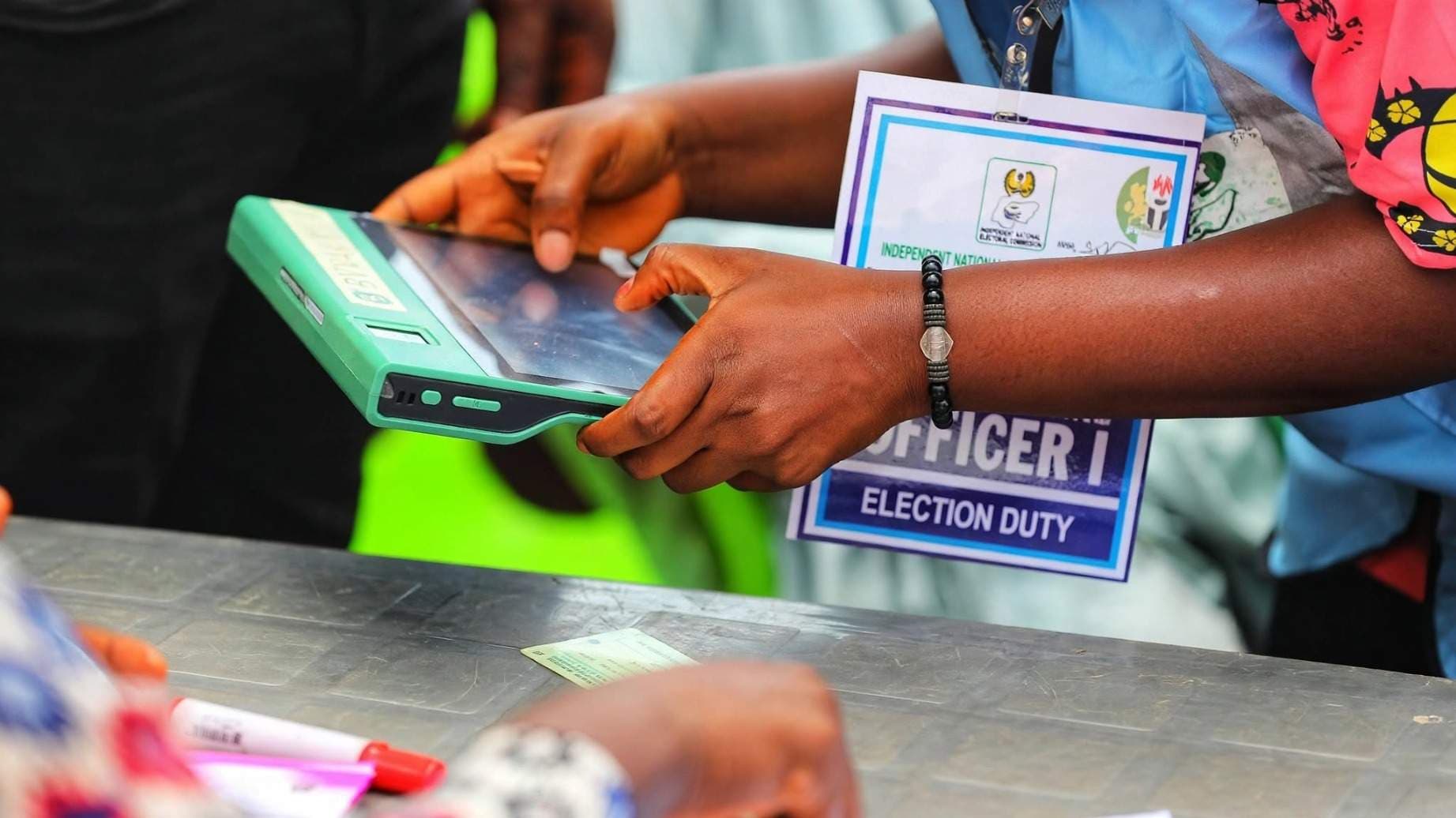
INEC also says it has acquired 57,000 new BVAS devices to handle this crowd ahead of 2027.
Who and where are the voters?
The Top 10 — The Usual Suspects Lead:
1. Lagos – 7,488,633
2. Kano – 6,570,276
3. Kaduna – 4,662,640
4. Katsina – 3,876,051
5. Rivers – 3,736,434
6. Oyo – 3,588,111
7. Delta – 3,525,988
8. Benue – 3,057,225
9. Ogun – 3,037,981
10. Bauchi – 3,012,547
At the bottom of the table? Ekiti with 1,055,708, followed by Bayelsa with 1,200,691, Yobe with 1,733,641, Gombe with 1,768,566 and the FCT with 1,772,043.
Who makes up the 103 million?
This is where the human story gets interesting.
* Gender: Men are 53,528,218 (51.75%) and women are 49,900,497 (48.25%). That gender gap is closing compared to 2023, when women were 44.4 million out of 93.4 million.
* Age: The register is still middle-aged. Voters aged 35-49 dominate with 43,265,946 (41.83%), followed by youth 18-34 with 29,777,576 (28.79%). Those aged 50-69 are 22,982,900 (22.22%) and 70+ are 7,402,291 (7.16%).
* Persons with Disabilities: 232,658 registered across 10 disability categories — about 0.23% of the total roll. It’s small, but it matters for inclusion.
Why does this matter?
Two big reasons.
First, with 103 million registered voters, Nigeria is now officially the largest democracy in Africa — by register size, not just population. That is massive bragging rights, but also massive logistical pressure.
Second, registration does not equal turnout. In 2023, 93.4 million registered but only 25.3 million actually voted — meaning 68 million people stayed home. So, the real question for 2027 isn’t just how many of us registered, but how many of us will actually collect our PVCs and show up.
What is CVR and ABIS anyway?
Think of it like this. CVR is the window where you can register for the first time, replace a lost PVC, or transfer your polling unit. INEC ran it in three phases to cover the whole country.
ABIS is the bouncer. It’s the software that scans fingerprints and faces to catch people who registered twice or registered underage. Without that cleanup, that 103 million figure would have been inflated.
What next? Your next steps?
If you registered between August 2025 and July 2026, listen up:
1. Check the Register: In line with Section 19(1) of the Electoral Act 2026, INEC will display the entire register for public scrutiny from 9th to 16th October 2026. Go to your local government or ward centre, check your name, picture and polling unit. If there is an error or you spot a dead person/underage name, you can file a claim or objection.
2. Collect Your PVC: The first phase of PVC collection at all local government centres kicks off on 9th October 2026. No PVC, no vote. Don’t leave it till February 2027.
Credit: cbinews.tv
#NigeriaDecides2027 #INEC #VotersRegister #Lagos #Kano #Kaduna #PVCCollection #NigerianPolitics #AfricaDemocracy #CVR #CBINewsTV