

Niger Appoints new Army Chief After Mutiny bid Fails
Last update: September 12, 2026
Disclaimer: This website may contain affiliate links, which means we may earn a commission if you click on the link and make a purchase. We only recommend products or services that we personally use and believe will add value to our readers. Your support is appreciated!
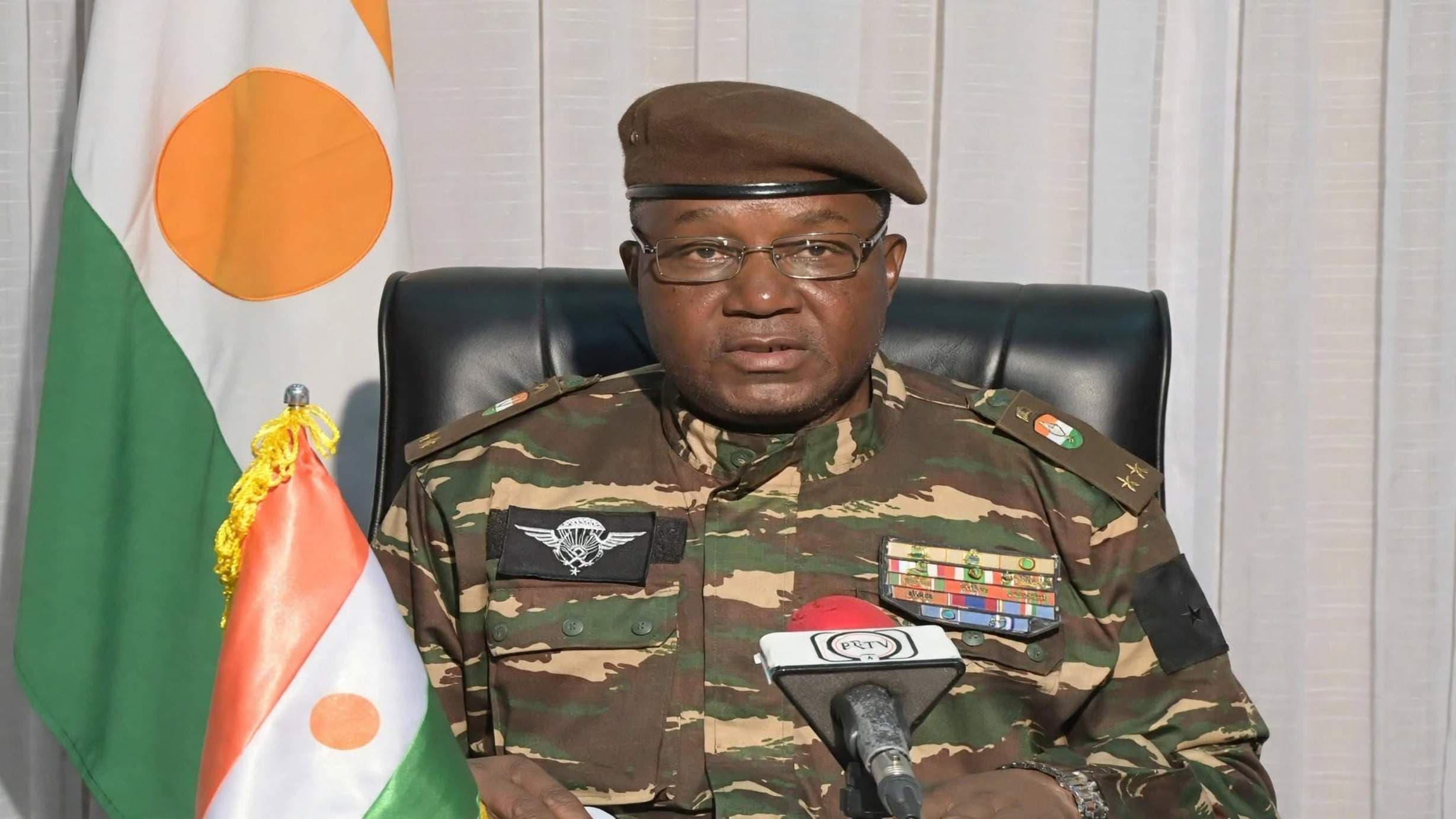
Just two weeks after gunfire echoed around sensitive sites in Niamey, Niger's strongman is cleaning house. Has the failed mutiny left General Tiani stronger — or more exposed than ever?
So, what exactly happened? In a move that has stunned observers in Niamey, Niger’s junta leader, General Abdourahamane Tiani, has appointed a new man to lead the entire armed forces.
According to state TV channel Télé Sahel on Friday, Brigadier General Mamane Sani Kiaou is now the new Chief of Defence Staff. In the same decree signed on 11 September 2026, **Brigadier General Abdourahmane Abou Zataka** was named the new Chief of Staff of the Army. They replace the outgoing defence chief, General Moussa Salaou Barmou. No official reason was given for his dismissal.
A top-level military shake-up.
Announced on public television in Niamey, Niger — but with ripple effects across the Sahel.
The decision-maker is General Abdourahamane Tiani, who seized power in July 2023. The new face is Mamane Sani Kiaou, described by associates as a “seasoned field commander”. He previously served as army chief and led operations against jihadists in the volatile Tillaberi region in the west and Diffa in the south-east.
Less than two weeks after a foiled mutiny on 29 August and formally decreed on 11 September 2026.
Damage control and loyalty. The mutiny was the gravest internal challenge to Tiani since the 2023 coup. Local reports suggest Tiani is now trying to sideline opponents and promote loyalists to consolidate his grip.
Disgruntled soldiers attacked several sensitive sites in the capital, including the presidential palace and captured the key Air Force Base 101 at the international airport. It took a full day of intense fighting, with Tiani’s presidential guard and Russian paramilitary allies — the Africa Corps — stepping in to “suppress the mutiny”.
This isn’t happening in a vacuum. Let’s rewind.
Niger has been run by General Tiani since he overthrew elected President Mohamed Bazoum in July 2023. Bazoum remains detained to this day.
Since then, Niger has done a full geopolitical U-turn. Out went longtime partners France and the United States — Kiaou himself led the negotiations for their withdrawal — and in came Russia. State TV even accused France of being behind last month’s uprising, without providing evidence.
But here’s the irony analysts are pointing out. The 2023 coup was justified by the poor conditions faced by frontline soldiers. Now, those same grievances are fuelling unrest against the junta. This is the third time this year Niamey has seen violent unrest, with troops suffering heavy losses against groups like al-Qaeda-linked JNIM.
Data from security trackers shows the Sahel has become the global epicentre of jihadist violence. Niger, Burkina Faso and Mali — all now under military rule and allied with Moscow — have seen militant attacks increase, not decrease, since cutting ties with Western forces.
Beyond the generals and geopolitics, think about the young Nigerien soldier from Tillaberi. He’s deployed for months with limited kit, poor pay, and little rotation, watching mates get killed in ambushes. Several analysts said the mutineers were frontline soldiers who had served in the south-west. For them, this wasn’t politics — it was survival and frustration over what one analyst called “discriminatory” deployment decisions.
On the other side, Tiani’s presidential guard remained “unwaveringly loyal”, repelling the assault on the palace. That loyalty gap is precisely what the new appointments are meant to fix. Kiaou recently toured key garrisons to “restore cohesion among the troops” — a clear sign the army is fractured.
Why It Matters?
Why should you care in Lagos, London or anywhere else?
1. Regional stability: Niger is a linchpin state. If its army fragments, the entire Liptako-Gourma region — the border zone of Niger, Mali and Burkina Faso — becomes a vacuum for jihadists.
2. Russia’s footprint: Calling in the Africa Corps to resolve an internal army dispute is “unprecedented” and shows an “increasing and openly acknowledged security dependence” on Moscow. It undermines the junta’s own sovereignty narrative.
3. Coup contagion: As one researcher warned, “In West Africa, military coups are becoming a structural risk”. A coup within a coup in Niger would set a dangerous precedent.
Mutiny vs Coup?
A lot of people are asking — was this a coup attempt? Defence Minister Salifou Mody called the plotters “a group of soldiers who have broken with military regulations”, and they never made a public statement. Analysts are calling it an “uprising” within the army rather than a full-blown coup to seize national power. Either way, it exposed deep cracks.
What’s Next?
Watch these three things:
1. The purge: Expect accountability trials and further reshuffles as Tiani tries to weed out suspected opponents. Analysts warn this could deepen divisions if he only focuses on purging rather than addressing security failures and economic hardship.
2. The frontline: Will Kiaou, the field commander, actually improve conditions and strategy in Tillaberi and Diffa? Or will the junta prioritise protecting itself “at the expense of the fight against terrorism”?
3. The Moscow factor: Will Russian involvement grow even more overt? The seizure of 34 Toyota pickups with mounted weapons and armoured vehicles after the mutiny shows how heavily armed the dissenters were.
For now, Niamey is calm, but the calm feels fragile. As cbinews.tv continues to track, the question isn’t just who leads Niger’s army — it’s whether the army itself can hold together.
#Niger #NigerCoup #Niamey #Tiani #Sahel #AfricaNews #BreakingNews #MilitaryMutiny #RussiaInAfrica #CBINewsTV #WestAfrica #Security