

Morocco Votes Tomorrow: Broken Promises Fuel Voter Apathy
Last update: September 22, 2026
Disclaimer: This website may contain affiliate links, which means we may earn a commission if you click on the link and make a purchase. We only recommend products or services that we personally use and believe will add value to our readers. Your support is appreciated!
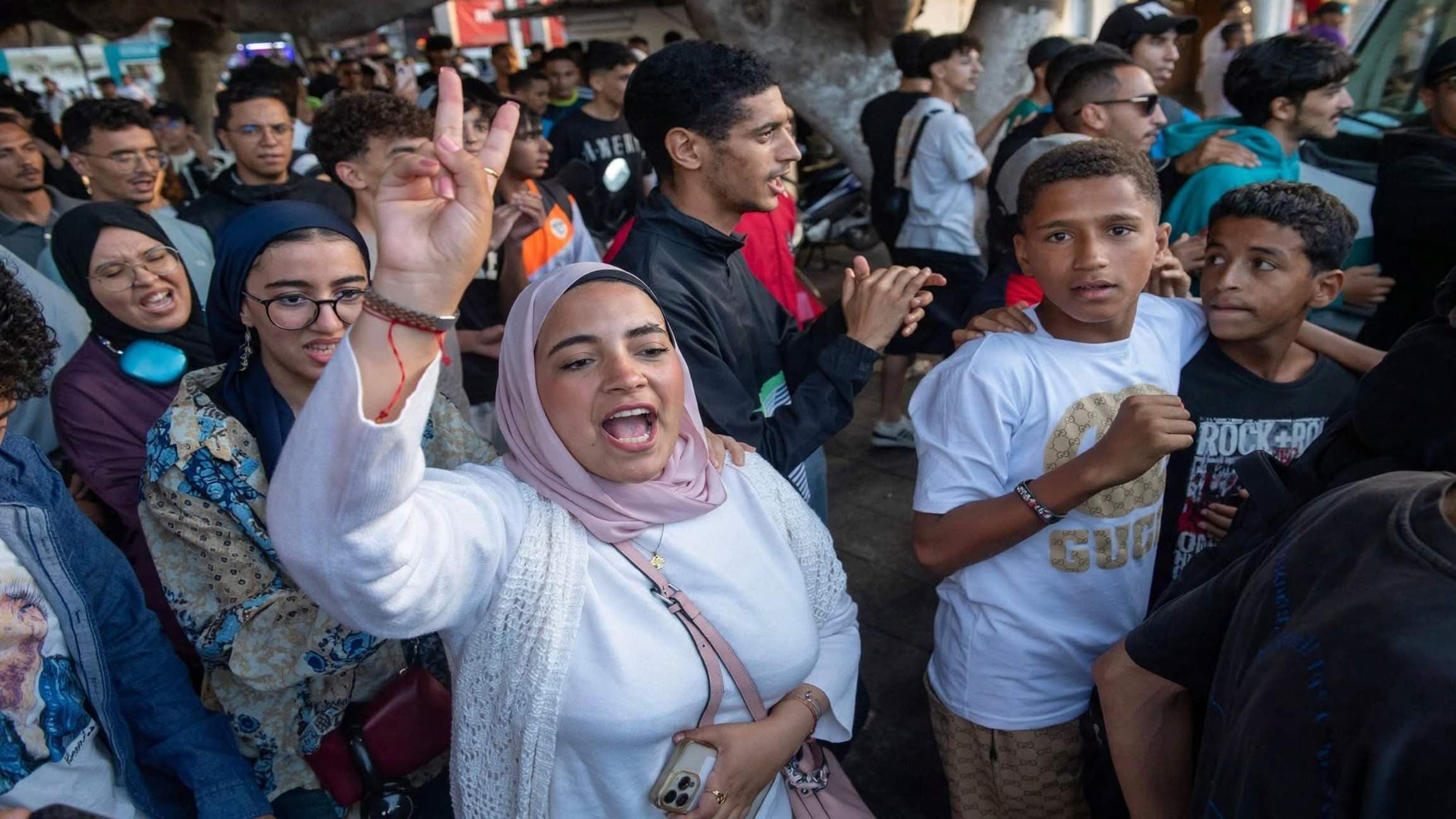
Promises, posters, loudspeakers – and a collective shrug. As Morocco heads to the polls tomorrow, many voters say they've heard it all before.
Let's be honest, the mood on the streets of Morocco right now isn't exactly carnival.
After more than 10 days of full-throttle campaigning, the country is set to vote this Wednesday, 23 September 2026, to elect all 395 members of the House of Representatives [Chamber of Deputies]. It's the 12th legislative election since independence in 1956, and only the second since the last one on 8 September 2021.
On paper, it's huge. Around 15.8 million registered voters, 7,288 candidates from 27 political parties, and 1,850 lists are all fighting for those 395 seats. The official campaign kicked off on 10 September at midnight and wraps up on 22 September at midnight – a 13-day sprint.
But on the ground? People are tired.
"It's the King behind these projects"
Take Youssef Guennoun, a florist in the middle of the noise, just trying to sell flowers while candidates blare slogans past his shop.
His verdict is brutal and familiar.
"The projects that exist are not theirs because it's the King who is behind these projects," he told cbinews.tv. "They only know how to give false promises that only work for their benefit."
And he had a suggestion that plenty of Moroccans would nod along to: "We should introduce a law that stipulates that any party that does not win a minimum of five seats should be disbanded because these parties get a lot of funds from the State but have no credibility."
That's the sentiment cutting through the posters this week – scepticism, pure and simple.
Why does the distrust run so deep?
This isn't happening in a vacuum. You can't understand this election without understanding what happened last year.
In September 2025, Morocco was rocked by the Gen Z 212 movement – named after Morocco's dialling code – after eight women died following routine C-sections in a public hospital that lacked basic equipment. What started as outrage over healthcare snowballed into nationwide protests in at least ten cities over corruption, crumbling schools, hospitals, and no jobs.
The state cracked down, thousands were arrested, and while the government did announce more spending on health and education, many young people say nothing fundamentally changed.
Then came the summer of 2026. In July, around 72,000 Moroccans tried to cross into the Spanish enclave of Ceuta in a matter of days – one of the biggest attempted exoduses in years – driven by that same lack of opportunity.
The numbers explain the frustration. Official data puts youth unemployment (15-24) at 37% in 2025, against a national average of 13%. Other assessments put it as high as 37.2% for that age group, with wider measures of young joblessness even higher at 29.2%.
And here's the democratic deficit: people aged 18-24 make up roughly 12% of Morocco's population but only 4% of the 15.8 million registered voters. They are the loudest on the streets, but the quietest at the ballot box.
This is bigger than party logos. Under Morocco's 2011 constitution – born out of the Arab Spring protests – parties are supposed to be the bridge between the Palace and the people. But when young Moroccans feel that real projects come from the King, not parliament, and when they see billions spent on the Africa Cup of Nations stadiums while hospitals struggle, that bridge looks shaky.
As Mohammed Benhamou, chairman of the Moroccan Institute for Strategic Studies, puts it: "Political parties are an important mechanism; they are key players in political and public life. They should change their culture, their methods, their approach, but should also evolve as an elite who must address a society that is changing."
He added: "Today, there is an enormous need not only to conceive some new strategies but to execute and implement strategies that exist already."
In other words – less talking, more doing.
So, what actually happens on Wednesday?
Moroccans will vote using a proportional list system. The 395 seats include 305 elected from local constituencies and 90 from national lists reserved for women and youth – a system designed to improve representation.
After the vote, King Mohammed VI will appoint a prime minister from the party that wins the most seats, who then tries to form a coalition government. Historically, that has meant weeks of horse-trading.
A new party law published in January 2026 (Organic Law No. 54.25) has also tightened governance rules for parties ahead of this vote – another sign the establishment knows credibility is on the line.
What Next?
1. Watch turnout, especially youth turnout. If under-25s stay home again, whoever wins will have a legitimacy problem.
2. Watch Ceuta and the streets. A low turnout or contested result could reignite the Gen Z 212 networks, who proved they can organise outside traditional parties on Discord.
3. Watch the coalition maths. With 27 parties running, no one gets 395 seats alone. The real fight starts on 24 September.
For now, the loudspeakers will go silent at midnight on Tuesday. And as Youssef the florist would tell you, most Moroccans will be listening for what comes after the slogans.
Source: cbinews.tv.
#MoroccoElection2026 #MoroccoDecides #GenZ212 #Ceuta #YouthUnemployment #NorthAfrica #MoroccoNews #ChamberOfDeputies #Rabat #Casablanca #CBINews