


Morocco Residents Return to Northwest as Flood Waters Recede
Last update: February 16, 2026
Disclaimer: This website may contain affiliate links, which means we may earn a commission if you click on the link and make a purchase. We only recommend products or services that we personally use and believe will add value to our readers. Your support is appreciated!
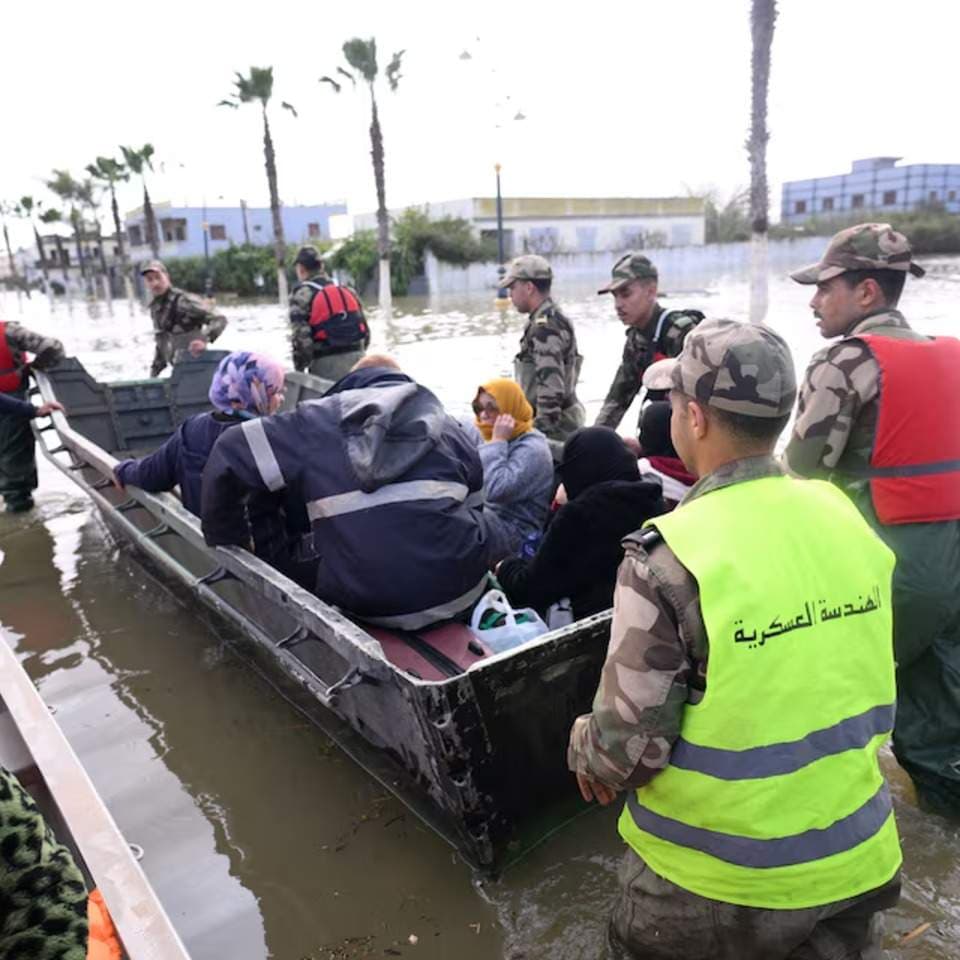
Government announces recovery plan as infrastructure upgrades and aid measures begin.
Moroccan authorities have begun coordinating the gradual return of residents to the city of Ksar El Kebir and other flood-affected areas in the northwest as weather conditions improve, state media reported on Monday.
Since early February, authorities supported by the army have evacuated about 188,000 people to protect them from rising river waters that flooded more than 110,000 hectares of land across the region.
The interior ministry said most residents of Ksar El Kebir, located 213 kilometres north of Rabat, are now permitted to return home, except those living in a small number of heavily affected neighbourhoods.
To ease the return process, train and bus services are being offered free of charge for residents who had taken refuge with relatives in other cities or in temporary centres and camps set up by the government.
Last week, the prime minister’s office announced plans to allocate 3 billion dirhams, equivalent to about 330 million dollars, to upgrade infrastructure and provide support to residents, farmers and shop owners impacted by the flooding. The hardest hit municipalities have been officially declared disaster areas.
The Oued Makhazine dam, which had risen to 160 per cent of its capacity following exceptional inflows, was gradually forced to release water downstream. This led to rising levels of the Loukous River, which inundated Ksar El Kebir and the surrounding plains.
Official data show that rainfall this winter was 35 per cent higher than the average recorded since the 1990s and three times higher than last year.
CBI News reports that Morocco’s national dam filling rate has climbed to nearly 70 per cent, compared with 27 per cent a year ago. Several major dams have been partially emptied to accommodate additional inflows.
The unusually heavy rainfall has effectively ended a seven-year drought that had previously pushed the country to increase investment in desalination projects.