


Mass Funeral in Bukavu for 26 Children Killed in School Blaze
Last update: September 14, 2026
Disclaimer: This website may contain affiliate links, which means we may earn a commission if you click on the link and make a purchase. We only recommend products or services that we personally use and believe will add value to our readers. Your support is appreciated!
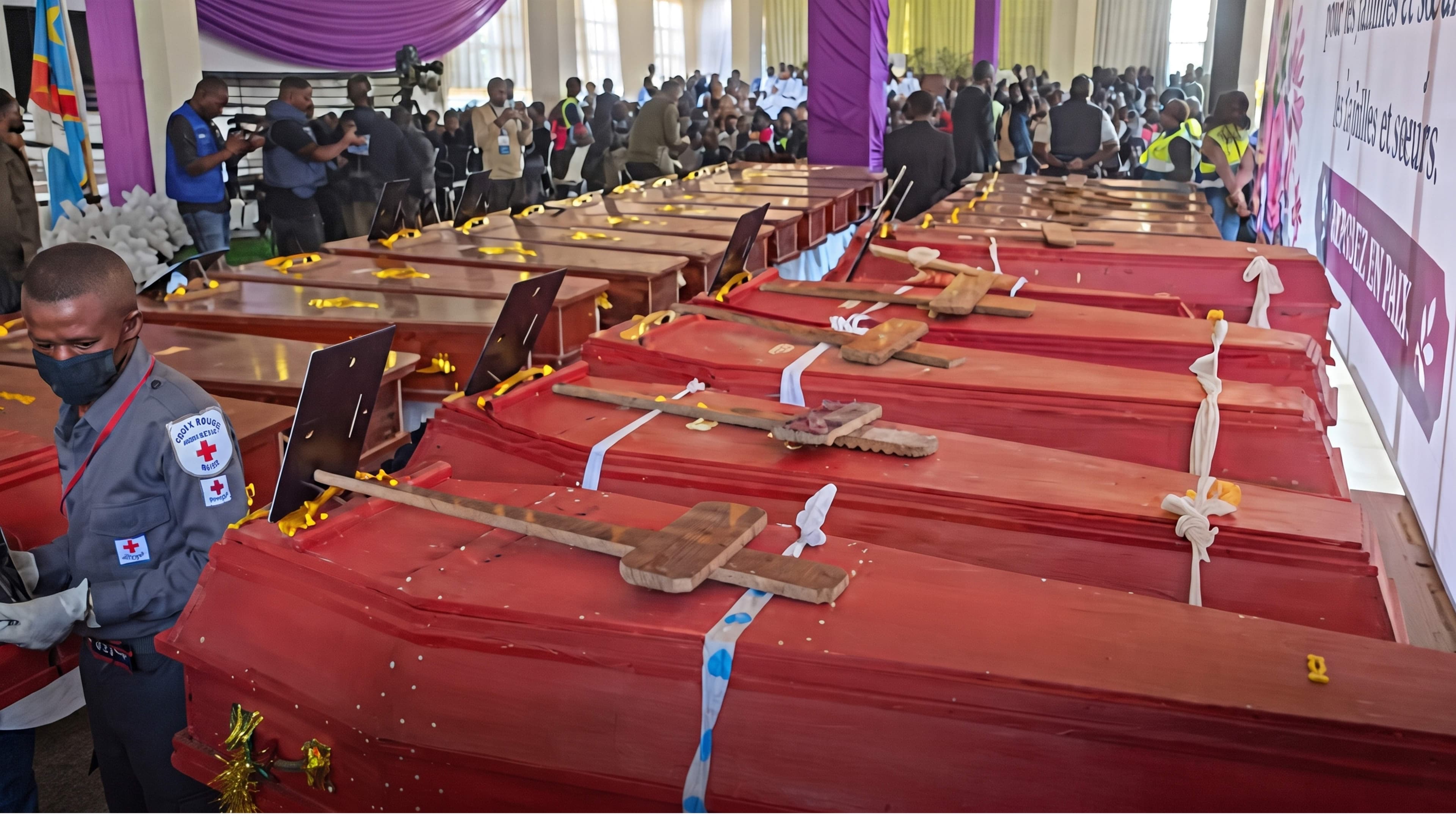
You could hear the screaming from streets away.
Imagine being in a maths lesson at 9 am on a Thursday, and the next moment your classroom - built of wooden planks - is filling with smoke. That's what happened last week in Bukavu.
On Saturday, the city stood still. Families gathered around rows of tiny white coffins in the eastern city, some clutching school photographs of children who would never come home. Hundreds turned out for the mass funeral. It was heartbreaking, quiet, and deeply, deeply human.
What We Know So Far
According to UNICEF, at least 26 children have died, and 25 others were injured after a fire tore through Ujamaa Primary School.
The blaze broke out at around 9 am local time (07:00 GMT) on Thursday, 11 September, while pupils were in class in the Chimpunda neighbourhood of Bukavu’s densely-populated Kadutu commune.
As flames ripped through the wooden building, pure panic took hold. Some children jumped from upper floors to escape, others sprinted for the exits. That rush triggered a violent stampede in which pupils were trampled.
Teacher Simon Kasamira, who was himself admitted to a clinic, told AFP: “In the middle of class, I suddenly heard students screaming, some were jumping from the upper floors, and others were running away through the doors”.
Another teacher, Innocent Rukiko, said: “Some climbed on top of others as they were running.”
A report by the Congolese education ministry said three fires had started at sites about 500 metres apart, with some victims dying from asphyxiation. Local officials say the inferno didn't stop at the school - it destroyed hundreds of homes, with around 300 houses affected, and left dozens injured. At one point, 21 patients were in intensive care.
M23 authorities, who have controlled Bukavu since February 2025, initially put the toll at 24 - including 19 girls and five boys - before UNICEF raised it to 26. Other reports, including from UN-backed Radio Okapi, suggest the fire spread from a nearby settlement to both Ujamaa and the adjoining Furaha secondary school.
These weren't statistics. They were kids in uniforms, brought into the Nyamulagira BDOM health centre in their school clothes. They were girls and boys who should have been doing homework on Thursday night.
For parents in Kadutu, the search was frantic. “Parents came from all over looking for their children. That's when I saw a huge fire engulfing our school built of wooden planks,” Kasamira said.
In a city that has seen so much conflict, this was a different kind of trauma - not bullets, but a classroom turned death trap.
This tragedy exposes three painful truths about life in eastern DRC right now:
1. Unsafe schools: Many schools in densely packed communes like Kadutu are still built from timber and planks, with no fire exits, extinguishers, or emergency planning. Overcrowding makes stampedes almost inevitable.
2. A city under strain: Bukavu is the capital of South Kivu province and has been under the control of the Rwanda-backed AFC/M23 armed group since February 2025. Basic services, urban planning, and emergency response are stretched to the breaking point, and fires in these hillside neighbourhoods can leap from house to house in minutes.
3. Children pay the price: According to UNICEF, eastern DRC is already one of the most dangerous places in the world to be a child. This isn't the first school fire in the region - Kenya saw 17 children killed in a dormitory blaze last year - but the combination of fire and stampede is devastatingly common.
It wasn't just the flames. In many of these cases, it's the smoke and the crush.
Asphyxiation risk: A nurse at a nearby clinic said around 50 students and several teachers were treated for severe asphyxia. Wooden buildings produce thick, choking smoke very quickly.
The stampede factor: With narrow doors and upper floors, children rushing at once trampled each other trying to get out.
Domino effect: Officials say the fire may have started in a house before spreading to the schools, which explains why so many homes were also lost.
Both sides are now calling for answers. Authorities in Kinshasa and the M23 administration in Bukavu have each called for an investigation, though the cause remains unknown.
M23 authorities declared three days of mourning immediately after the incident. The urgent next steps, according to local leaders and child protection groups, must be:
An independent probe into how three fires started so close together
Emergency support for the families who lost homes and children
A full audit of school safety in South Kivu - moving away from wooden structures, installing proper exits, and training teachers in evacuation.
Psychosocial support for survivors - many of whom jumped from windows and witnessed friends being trampled
For now, Bukavu mourns. Twenty-six small coffins, hundreds of mourners, and a city asking how many more warnings it needs before classrooms are made safe.
This rewrite is based on original wire reporting and agency updates, curated for you by cbinews.tv.
#Bukavu #DRCongo #UjamaaPrimary #SchoolFire #SouthKivu #M23 #UNICEF #CongoNews #AfricanNews #ChildSafety #cbinewsTV
Written by Babatimilehin kayode
Posted by Babatimilehin kayode · Last updated: September 14, 2026