


Lagos Warns Residents of Flooding, Excessive Rainfall in 2026
Last update: March 13, 2026
Disclaimer: This website may contain affiliate links, which means we may earn a commission if you click on the link and make a purchase. We only recommend products or services that we personally use and believe will add value to our readers. Your support is appreciated!
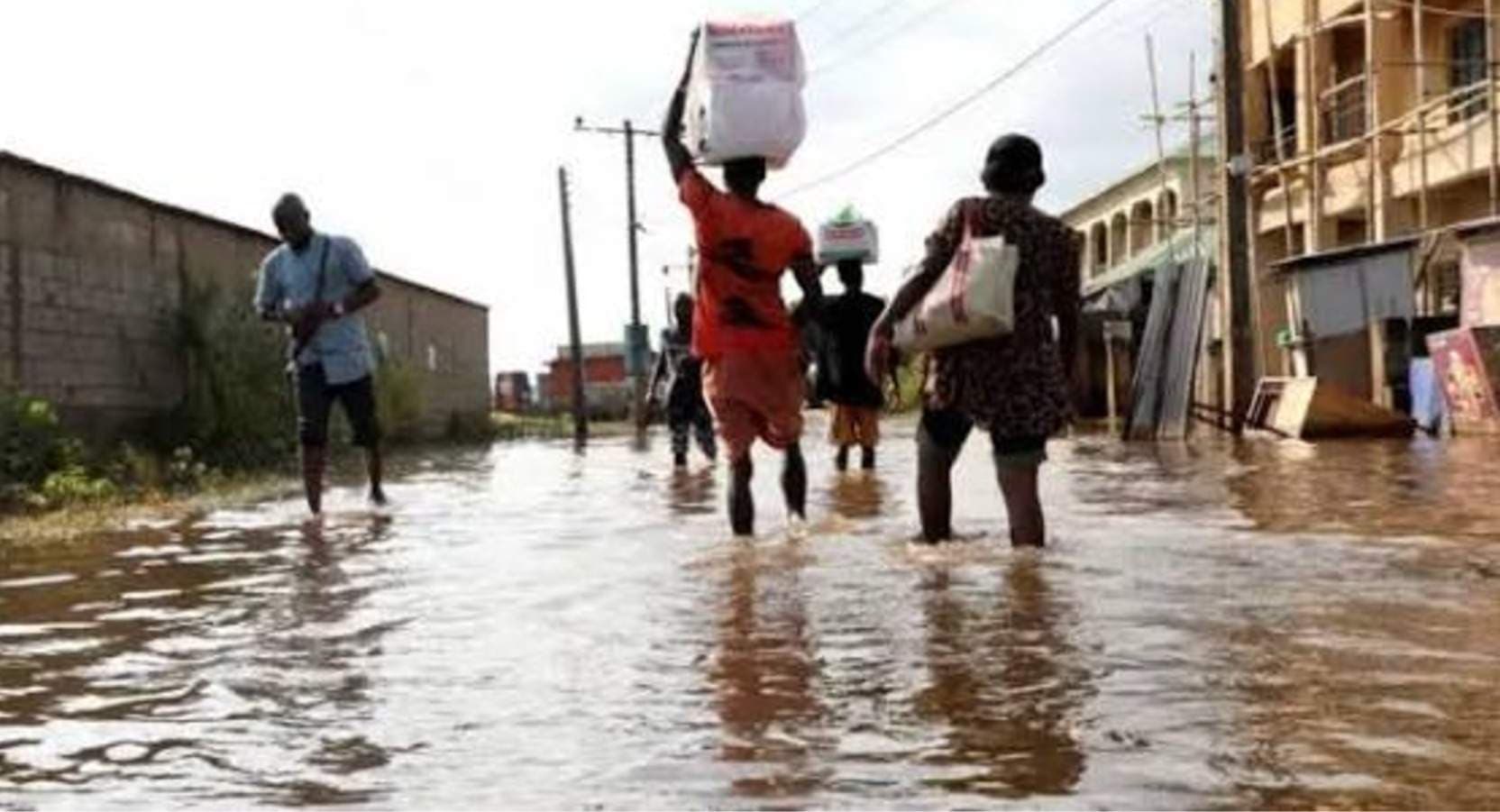
Lagos warns residents of possible flooding, excess rainfall this year....
The Lagos State Ministry of the Environment and Water Resources has alerted residents to the possibility of flooding and strong winds as the rainy season begins, urging preparedness and compliance with environmental regulations.
The Commissioner for Environment, Tokunbo Wahab, disclosed this in Lagos.
Wahab also issued the warning while presenting the Seasonal Climate Predictions and their socio-economic implications for the state.
He said the predictions were based on forecasts released on Feb. 10 by the Nigerian Meteorological Agency (NiMet), which outlined expected rainfall patterns, temperature changes and other weather parameters across the country.
According to him, the state conducts the annual briefing to inform residents and prepare them for the expected impact of the rainy season and related weather events.
The commissioner said the 2026 forecast was based on a projected weak La Niña and a neutral phase of the El Niño–Southern Oscillation (ENSO), which could influence rainfall patterns.
He explained that a weak La Niña, the cold phase of the ENSO cycle, features slightly cooler-than-normal Pacific Ocean waters that cause minor shifts in rainfall and generally weaker global impacts.
An ENSO-neutral phase represents the normal state with no extreme climate patterns, favouring typical seasonal weather conditions.
Wahab said the forecast indicated an early to normal onset of the rainy season, normal to late cessation and normal to above-normal rainfall across the state.
He added that temperatures were expected to be above normal between March and May.
“Year 2026 is predicted to start with a weak La Niña in January, while the neutral phase of ENSO is expected to persist within the first six to eight months of the year.
“This suggests an early onset of the rainy season, longer-than-normal duration and delayed end of the rainy season in Lagos.
“As a result, above-normal rainfall amounts are anticipated in the first peak of the rainy season, while normal rainfall amounts are expected in the second peak.
“The rainy season is expected to start as early as the last week of March, while the end of the season is expected in the first week of December. Also, the average annual rainfall amount predicted is between 1,650mm and 3,030mm,” he said.
Wahab said rainfall was expected to begin on March 31 in Ikeja with a cessation date of Dec. 2 and an estimated annual rainfall of 1,932mm.
He added that Badagry was projected to experience rainfall from March 28 to Dec. 3, with an annual rainfall of about 2,010mm.
Ikorodu is expected to record rainfall from March 31 to Dec. 2 with about 1,935mm, while Lagos Island is projected to have rainfall from March 30 to Dec. 2 with about 1,968mm.
Epe is also expected to record rainfall from March 29 to Dec. 3, with an annual rainfall of about 1,984mm.
According to him, the average rainfall expected across the state’s 20 Local Government Areas is about 1,965mm.
Wahab said Lagos and neighbouring Ogun State were likely to experience above-normal rainfall.
He warned that heavy rainfall could lead to flooding in parts of the state, while strong winds at the onset and end of the rainy season could pose risks to lives and property.
He noted that thunderstorms and heavy rains might disrupt commercial activities and cause flight delays.
The commissioner said the state government had strengthened its monitoring system through its network of weather and river gauge stations to improve preparedness for weather and flood-related incidents.
He added that the ministry was collaborating with NiMet on seasonal climate predictions to provide early warning tools for farmers, planners and businesses likely to be affected by rainfall patterns.
Wahab said the state had intensified flood control measures, including year-round drainage maintenance and sustainable solid waste management.
He said the government was also maintaining strong collaboration with the Ogun-Oshun River Basin Development Authority to regulate water release from the Oyan Dam to prevent flooding along downstream sections of the Ogun River.
According to him, low-lying communities such as Agiliti, Agboyi, Itowolo and Ajegunle are closely monitored due to the possibility of flooding from the Ogun River.
Wahab also said the Lagos State Signage and Advertisement Agency had been placed on alert to ensure compliance with safety regulations for billboards and telecommunications masts in view of the expected strong winds.
He added that emergency response and traffic management agencies had been placed on high alert to reduce the impact of thunderstorms and heavy rainfall.
The commissioner appealed to residents to desist from indiscriminate dumping of refuse and construction on drainage channels, noting that such practices contribute significantly to flooding.
He urged residents living along flood plains in areas such as Owode, Iwaya, Makoko, Badia, Ijora, Isaalu, Pota and Shibiri to remain vigilant and be prepared to relocate to safer areas if necessary.
Wahab also urged motorists to observe speed limits during the rainy season to avoid accidents.
He appealed to residents to regularly clear drains around their homes to ensure the free flow of storm water and support government efforts to prevent flooding across the state.