

July 1 Shock: Nigeria Adds 4% Green Tax to Large SUVs Despite 40% Duty Cut
Last update: April 24, 2026
Disclaimer: This website may contain affiliate links, which means we may earn a commission if you click on the link and make a purchase. We only recommend products or services that we personally use and believe will add value to our readers. Your support is appreciated!
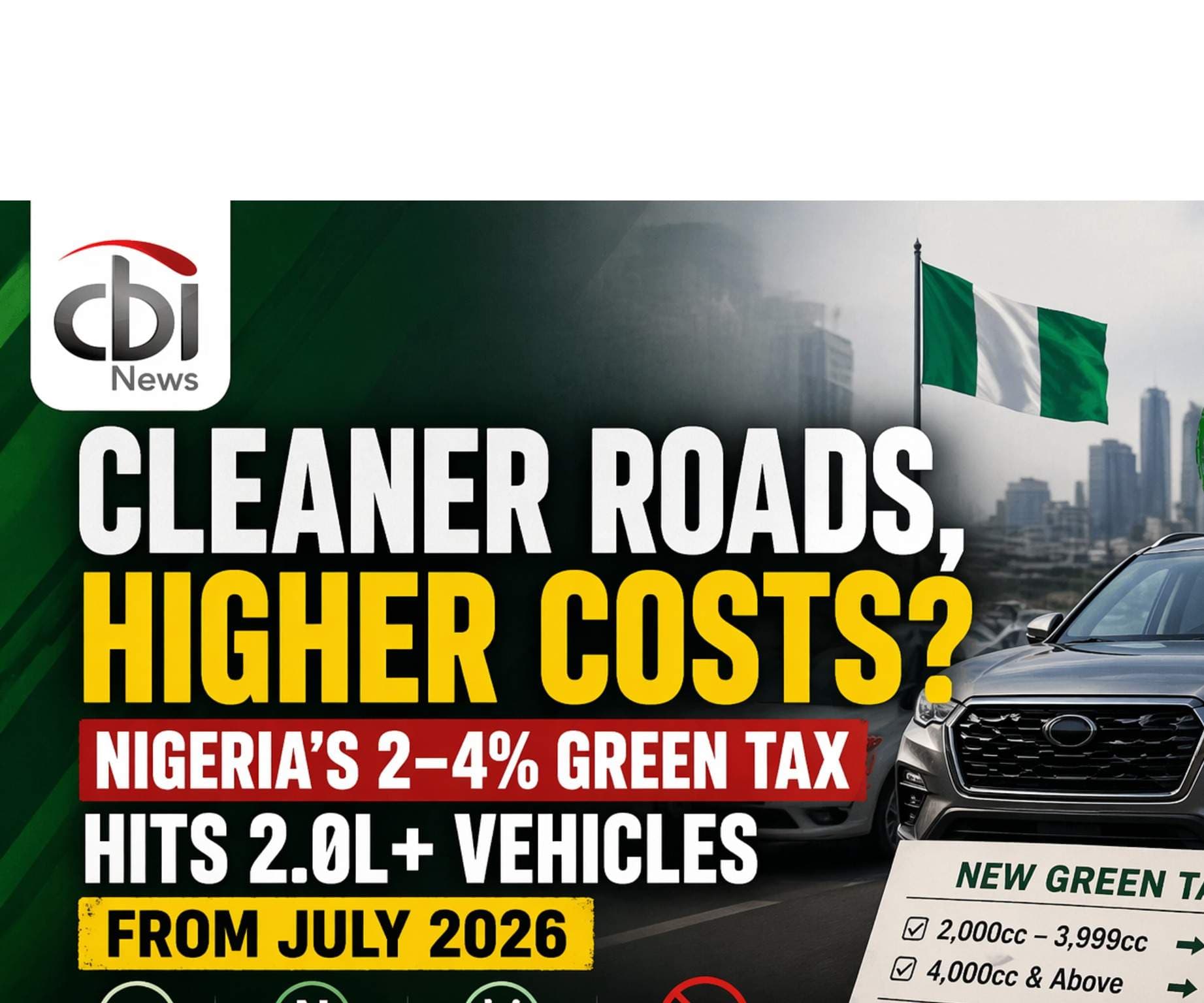
A new "green tax" surcharge on vehicles in Nigeria is coming, scheduled to take effect on July 1, 2026.
Nigeria will add a new environmental levy to larger petrol and diesel vehicles from July 1, 2026. It is part of the 2026 Fiscal Policy Measures signed off on April 1, and it sits alongside a cut in import duties, a planned vehicle recycling fee, and wider alignment with the ECOWAS Common External Tariff.
The goal is straightforward: price in the pollution cost of high-capacity engines, nudge buyers toward smaller cars, EVs and locally assembled models, and raise non-oil revenue as the government pushes its post-subsidy reforms.
What changes on July 1
Targeted vehicles: 2,000cc to 3,999cc engines attract a 2% surcharge; 4,000cc and above attract 4%
Exempt: engines below 2,000cc, mass-transit buses, electric vehicles, and vehicles manufactured or assembled in Nigeria
Legal basis: approved April 1, published in the government circular, replaces the 2023 fiscal framework
Administration: collected at import/clearance alongside existing duties
Other 2026 auto policy moves happening at the same time
Import duty cut: fully built passenger vehicles, 4WDs and station wagons drop from a combined 70% (35% duty + 35% levy) to 40% total, to lower ownership costs
Grace period: 90 days for importers with Form M and irrevocable trade agreements opened before April 1, 2026, to clear at old rates.
Vehicle recycling fee: a mandatory End-of-Life Vehicle fee starts in 2026, projected to generate over N150 billion a year by formalising scrappage and parts recovery
Broader context: Import Adjustment Tax on 192 tariff lines, zero duty on selected machinery, and phased alignment with AfCFTA/ECOWAS commitments through 2036
Why prices may still stay high
The duty cut should help, but the new 2-4% green levy, the recycling fee, and naira volatility mean the net saving for buyers of large-engine used cars, the bulk of Nigeria's market, will be limited. Luxury SUVs and high-capacity imports will feel the surcharge most, while buyers of sub-2.0 litre cars, EVs, and made-in-Nigeria models avoid it entirely.
#Nigeria #GreenTax #AutoIndustry #FiscalPolicy2026 #ElectricVehicles #MadeInNigeria #VehicleImport