


Houthi Advance Displaces 130,000 in Yemen as Taiz City at Risk: IOM
Last update: September 22, 2026
Disclaimer: This website may contain affiliate links, which means we may earn a commission if you click on the link and make a purchase. We only recommend products or services that we personally use and believe will add value to our readers. Your support is appreciated!
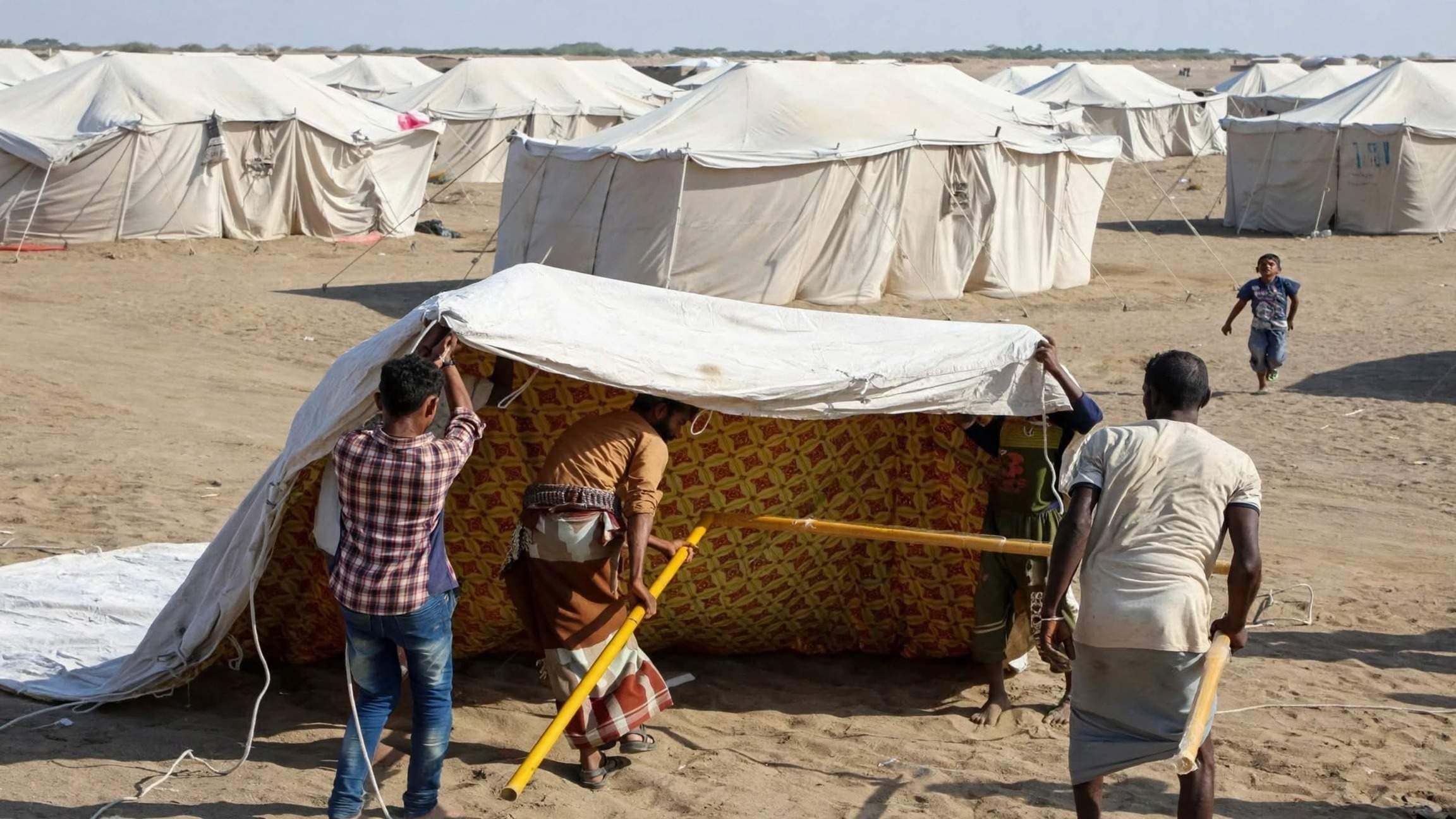
Imagine packing up your entire life in a few hours — again. For the third or fourth time. That’s the brutal reality for nearly 130,000 Yemenis who have been forced to run in just the past few weeks.
Here’s what we know at cbinews.tv.
This is not just another statistic from a faraway war. It’s a rapidly unfolding humanitarian emergency.
According to the International Organisation for Migration (IOM), nearly 130,000 people have been displaced across seven governorates in Yemen because of a sudden escalation in fighting.
And the numbers are moving terrifyingly fast. IOM’s regional director for the Middle East and North Africa, Othman Belbeisi, put it bluntly: “The numbers keep climbing. On September 18 we recorded 118,086 displaced people. Three days later, the figure has risen by 11,352.”
Why is this happening now, and how?
Earlier this month, the country was plunged back into intense violence as Iran-backed Houthi rebels pushed down the Red Sea coast, capturing the strategic port of Mocha.
Since early September, Houthi forces have pushed along Yemen's Red Sea coastline and seized territory near the Bab al-Mandab Strait, a key chokepoint for oil and global shipping.
The IOM is now warning that Taiz city itself could be the Houthis’ next target — a move that would trigger a far deeper humanitarian catastrophe in a city that has been on the frontline for years.
Behind the 129,438 figure is a family sleeping on a school floor in Taiz. A mother carrying a child and a mattress. A fisherman from Mocha who can’t return to his boat because his port is now a battlefield.
Yemen was already home to one of the world’s worst displacement crises — nearly 4.8 million people were previously displaced before this latest surge. When you add another 130,000 in a matter of weeks, shelters overflow, water runs out, and aid teams are stretched to breaking point.
This didn’t start last week. To understand why it matters, you have to go back to 2014.
Yemen has been mired in conflict since 2014, when the Houthi movement seized control of parts of the country, including the capital Sanaa, prompting a Saudi-led military intervention in March 2015 in support of the internationally recognised government.
What followed was 11 years of grinding war. The fighting has left tens of thousands dead and millions displaced, creating a humanitarian crisis the UN has repeatedly called one of the world’s largest. Today, some 21 million people — roughly two-thirds of Yemen’s population — need humanitarian aid. Years of fighting, economic collapse, and recurring natural disasters have left the health system in tatters and famine a constant threat.
A UN roadmap towards a permanent ceasefire was discussed in 2023 after direct talks between Saudi Arabia and the Houthis, but it was never formalised. That fragile truce is now unravelling on the Red Sea coast.
Why this Matters?
1. It’s a double crisis: These new displacements are on top of an existing 4.8 million internally displaced. Aid warehouses are already empty.
2. Taiz is a tipping point: If fighting moves into Taiz city, which has been besieged for years, hundreds of thousands more could be trapped without food, water, or hospitals.
3. Regional ripple: The Bab al-Mandab Strait handles about 12% of global trade. Fighting there doesn’t just affect Yemenis — it affects shipping, oil prices, and the crossing to Djibouti and the Horn of Africa.
4. Funding is drying up: The IOM says it is providing emergency assistance — shelter, water, cash — but is calling on the international community for more support as needs outpace funding.
WHAT NEXT?
For aid agencies: The IOM and OCHA are scrambling to pre-position supplies around Taiz and track new displacement in real-time. They are urging safe corridors for civilians.
For the world: All eyes are on whether diplomatic pressure can halt the advance on Taiz city. Without a renewed ceasefire push, aid workers fear we could see the 130,000 figure double within weeks.
For you, following the story: This is one to watch not just as a Middle East conflict, but as a human story of resilience. These families need more than headlines — they need sustained aid and a political solution that finally sticks after 11 years.
At cbinews.tv, we’ll keep tracking the IOM Displacement Tracking Matrix as new figures come in.
Got thoughts? Should the international community be doing more for Yemen?
#YemenCrisis #HouthiAdvance #Taiz #YemenDisplacement #IOM #RedSeaCrisis #MochaPort #HumanitarianCrisis #MiddleEastNews #cbinewstv #YemenWar #BabAlMandab