


Children’s Day 2026: A Nation Cannot Celebrate Children it Cannot Protect
Last update: May 29, 2026
Disclaimer: This website may contain affiliate links, which means we may earn a commission if you click on the link and make a purchase. We only recommend products or services that we personally use and believe will add value to our readers. Your support is appreciated!
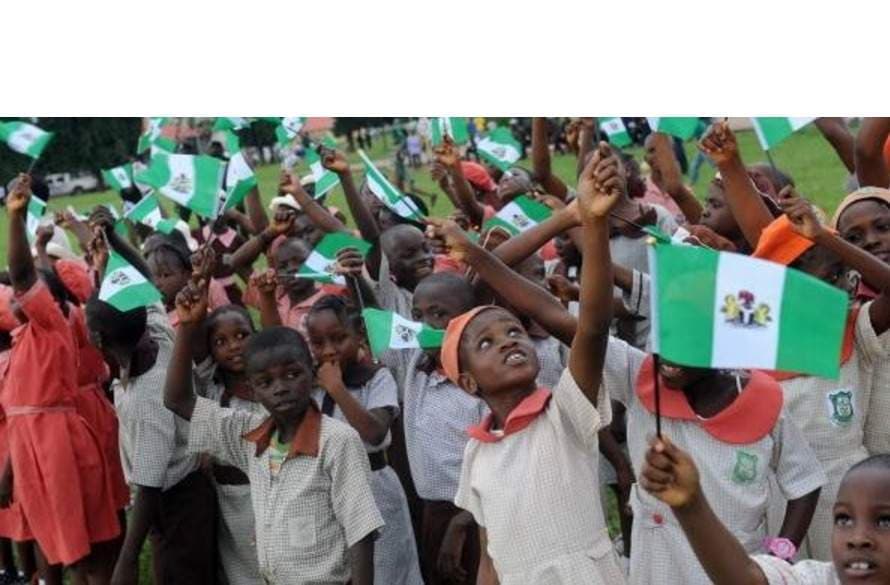
Today, across Nigeria, children will dress in colourful clothes. They will sing, dance, march in parades and recite poems about hope; prominent government officials will deliver speeches. Photographs will be taken of smiling children waving flags beneath the reassuring language of celebration.
The theme for this year’s Children’s Day is profound: “Future Now: Promoting Inclusion for Every Nigerian Child.” It is a theme that calls us beyond ceremony. It asks us to look, honestly and unflinchingly, at the Nigerian child—not only the child on the parade ground, but the child whose life is defined by fear, hunger, exclusion, displacement, abuse or captivity.
Because before we speak of inclusion, we must speak of protection.
A nation cannot celebrate children it cannot protect.
What does Future Now mean to the child who cannot go to school because the journey to the classroom has become unsafe? What does inclusion mean to the child living on the street, begging at traffic intersections, sleeping in danger, or labouring when he or she should be learning and playing? What does Children’s Day mean to parents who have spent days, weeks, months or even years waiting for news of a kidnapped child?
Nigeria’s children are not asking for luxury. They are asking for what should be ordinary: to wake up alive and safe; to attend school without the terror of abduction; to eat nourishing meals; to receive medical attention when ill; to be protected from violence and exploitation; to be treated with dignity whether rich or poor, male or female, living with a disability or displaced by conflict.
Yet, for too many Nigerian children, the ordinary has become a privilege.
In November 2025, UNICEF condemned the attack on a girls’ school in Kebbi State in which students were abducted. Days later, more than 300 students and teachers were abducted from St. Mary’s School in Papiri, Niger State, before their eventual release in December. In April 2026, gunmen attacked an institution housing pupils in Lokoja, Kogi State, abducting children. Only days ago, Nigeria’s military reported rescuing captives from armed extremists in Borno State, among them children. Dapchi followed. Kankara followed. Kaduna followed. Oriire in Oyo State. The names of communities may change; the pattern remains painfully familiar: children taken from the places where they should be safest, families plunged into anguish, schools shut down, education disrupted, and a nation briefly outraged before attention moves elsewhere. These are not isolated disturbances; they are warnings about a country in which childhood itself is increasingly under siege.
A child who is afraid to enter a classroom is already excluded.
A girl whose education ends because her parents fear she may be kidnapped is excluded.
A displaced child struggling to study under impossible conditions is excluded.
A child with a disability who cannot access school, healthcare or social support is excluded.
An abused child whose cries are ignored by adults is excluded.
And a child sent onto the streets to beg for survival has been excluded from the very promise of Nigeria.
UNICEF’s Nigerian Child 2025 Report presents a troubling national picture: two out of every three children in Nigeria live in multidimensional poverty, lacking basic essentials such as healthcare, quality education, nutrition, protection and clean water. More than half of Nigerian children experience some form of violence before the age of 18. UNICEF also reports that Nigeria carries the world’s heaviest burden of out-of-school children, with over 11 million children out of school. The number represents a child with a name, a dream, a voice and a right to be protected.
So, as government celebrates Children’s Day under the banner of inclusion, it must understand that Nigerian children require more than encouraging words. They require measurable action.
The Federal Government, state governments and local authorities owe every Nigerian child safe schools, functional healthcare, access to quality education, adequate nutrition, birth registration, disability-inclusive services, social protection for poor families and enforceable systems against abuse, trafficking, child labour and forced marriage.
Government also owes children accountability.
It is not enough to condemn abductions after they happen. It is not enough to promise rescue operations after children have been seized. Nigeria must prevent these attacks through intelligence-driven security, community early-warning networks, protected school environments, properly funded response mechanisms and prosecution of those who terrorise children and their families.
Nigeria already has policies and commitments on safe schools. The problem is the distance between policy and the frightened child. Reports in late 2025 indicated that the implementation of the Safe Schools Initiative remained stalled in many states, even as school abductions persisted. No policy should remain a file in an office while children face danger in their classrooms and dormitories. And justice institutions also carry a sacred obligation. Every abducted child must matter. Every abused child must matter. Every report of violence against a child must be taken seriously and acted upon swiftly. Perpetrators must not be shielded by influence, family ties, community silence or institutional indifference.
But protecting children is not the duty of government alone.
Families owe children care, not cruelty. Parents and guardians must reject practices that deny children education, expose them to violence or silence them when they report abuse. Religious and traditional leaders must use their influence to protect children, not excuse harmful practices in the name of culture, poverty or reputation. Schools must become safe spaces where signs of distress are recognised, reported and addressed. Neighbours must understand that protecting a child is not interference; it is responsibility.
Too often, abuse thrives because adults choose silence. Too often, a child is told to endure what no child should experience. Too often, families hide violations to avoid shame, leaving the child to carry burdens imposed by grown people.
The shame does not belong to the child. It belongs to a society that fails to protect the vulnerable.
The media and civil society must also remain vigilant. Stories about abducted, abused, destitute, disabled and displaced children cannot be allowed to disappear once the headlines fade. Journalists must report these issues with compassion and persistence, protecting children’s identities while demanding answers from those in authority. Advocacy must move beyond sympathy to sustained pressure for justice, safety and public investment.
Children are often described as the leaders of tomorrow. It is a comforting phrase, but it can also become an excuse to postpone their rights. Children do not begin to matter tomorrow. They matter today. Their safety cannot wait for tomorrow. Their education cannot wait for tomorrow. Their protection from violence cannot wait for tomorrow.
That is the true meaning of Future Now.
The future is the frightened schoolgirl who still deserves to learn.
The future is the displaced child who deserves shelter and stability.
The future is the street child who deserves rescue, rehabilitation and dignity.
The future is the child living with disability who deserves access, support and respect.
The future is every Nigerian child who deserves not merely to survive, but to flourish.
As the parades end and the speeches are filed away, Nigeria must decide what Children’s Day truly means. Will it remain an annual festival of music, uniforms and promises? Or will it become a solemn national covenant that no child will be abandoned to violence, hunger, captivity, abuse or exclusion?
No Nigerian child should have to exchange safety for education, dignity for survival, or childhood for fear.
A country that fails its children does not merely fail the future. It fails itself in the present.
Today, Nigeria must do more than celebrate its children.
Nigeria must protect them.