

CDC Warns Ebola Could top 20,000 Cases
Last update: June 8, 2026
Disclaimer: This website may contain affiliate links, which means we may earn a commission if you click on the link and make a purchase. We only recommend products or services that we personally use and believe will add value to our readers. Your support is appreciated!
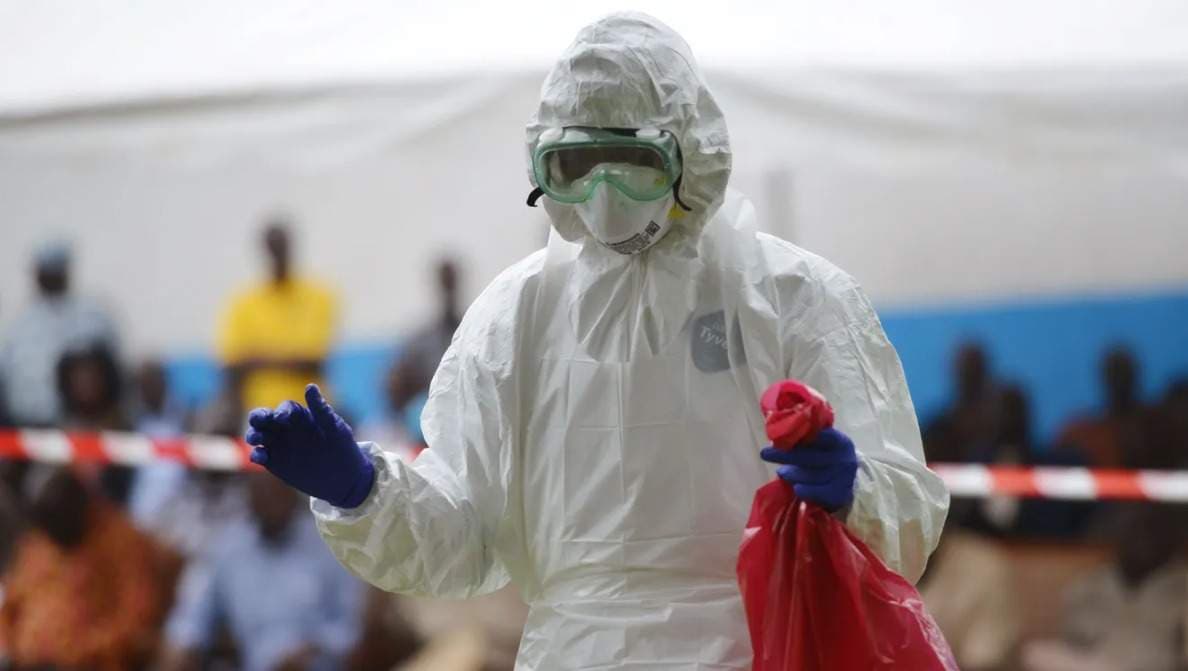
Without a rapid push to find and isolate patients, this could become the biggest Ebola crisis since West Africa in 2014 – and there is still no approved vaccine for this strain.
Right, here is the situation in plain terms.
The US Centres for Disease Control and Prevention (CDC) is sounding the alarm. New modelling from the agency says the Ebola outbreak unfolding in Central Africa could sit anywhere between around 10,000 cases and well over 20,000 in the coming months. It all hinges on one thing: how quickly infected people are found and isolated.
In the worst-case run, we are looking at numbers close to the West Africa epidemic from 2014 to 2016, which infected more than 28,000 people and killed over 11,000.
Dr Satish Pillai, who leads the CDC's Ebola response, put it bluntly: "Without strong public health interventions, an outbreak of that scale is possible."
Jennifer Nuzzo, director of Brown University's Pandemic Centre, says the modelling matches what specialists on the ground are already worried about. She also flags that projections are shaky, because data is limited and outbreaks rarely behave in a straight line.
Health officials are keen to stress these are scenarios, not forecasts.
What is making this outbreak trickier:
It is being driven by the Bundibugyo strain, a rare form of Ebola for which there is currently no approved vaccine or specific treatment.
It spreads through direct contact with bodily fluids like blood, vomit and semen, and it can cause severe fever, vomiting, diarrhoea and internal bleeding.
The Africa Centres for Disease Control and Prevention has logged around 400 confirmed cases and 63 deaths so far, but the real total is likely higher because of missed infections.
The context on the ground is brutal.
Fighting between government forces and the M23 rebel group, plus attacks by the Allied Democratic Forces, has wrecked clinics, forced mass displacement and made contact tracing a nightmare. The World Health Organization declared it a global health emergency in May.
The CDC numbers show how much isolation matters:
If only about 20% of cases are isolated, models point to more than 20,000 infections and roughly 4,000 deaths within three months.
Push that isolation rate to 50% to 70%, and cases could be held closer to 10,000.
The CDC is the first to admit modelling has limits.
During West Africa in 2014, some worst-case estimates massively overestimated the final toll. But officials say the point still stands: if containment slips, this could spiral fast.
For now, agencies are racing to boost surveillance, improve detection and get isolation rates up before this becomes one of the largest Ebola crises in recent history, cbinewstv reports.
#EbolaOutbreak #CDC #CentralAfrica #Bundibugyo #PublicHealth #WHO #GlobalHealth #AfricaCDC #cbinewstv