

BRICS Bets on Tech to Boost Trade at New Delhi Summit
Last update: September 12, 2026
Disclaimer: This website may contain affiliate links, which means we may earn a commission if you click on the link and make a purchase. We only recommend products or services that we personally use and believe will add value to our readers. Your support is appreciated!
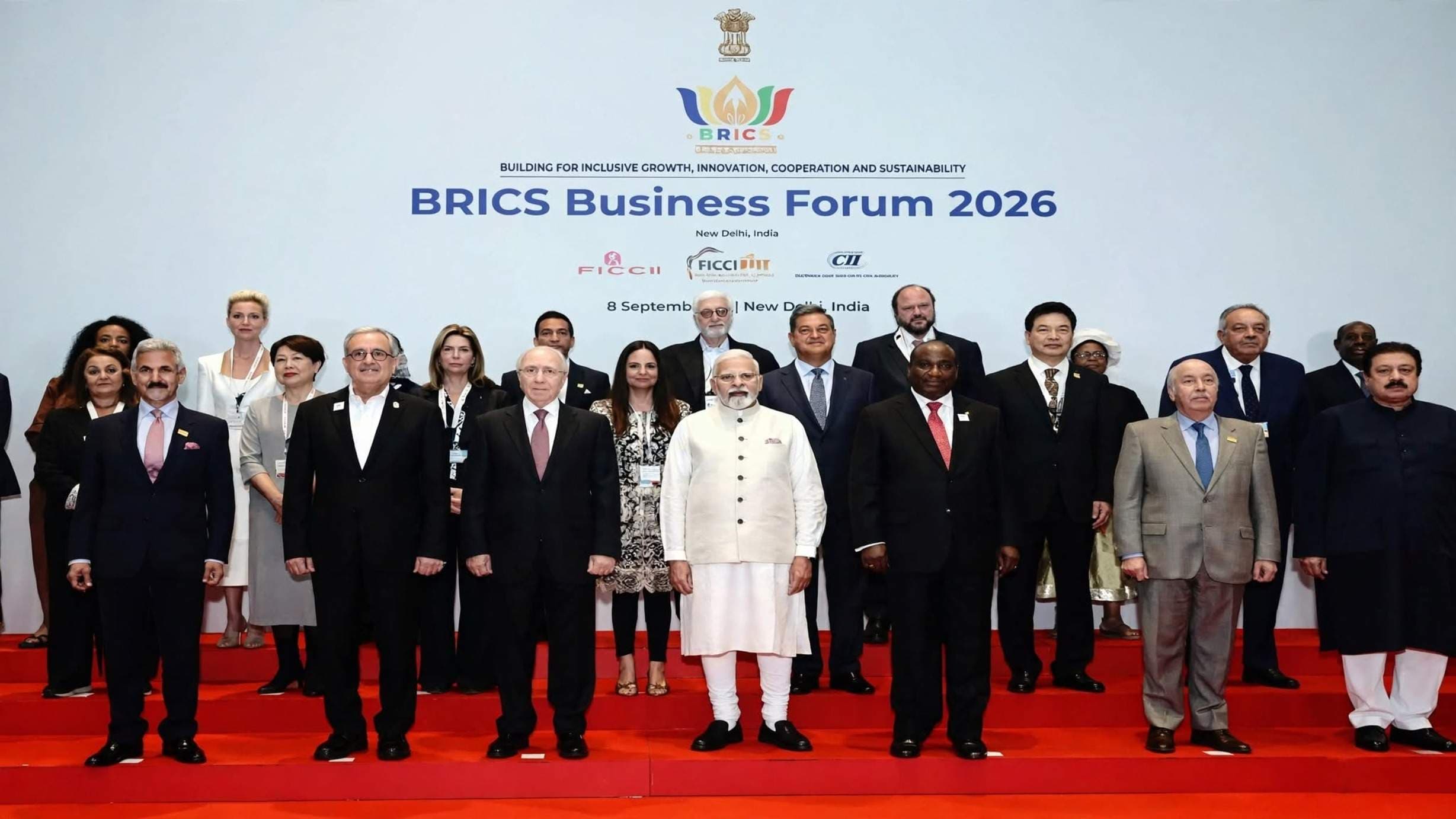
Forget the old image of BRICS as just a talking shop for emerging economies. In a buzzing conference hall in New Delhi, business leaders from Brazil to Beijing were talking about something far more practical: how to actually do business with each other at the click of a button.
India kicked off its fourth BRICS Chairship in style this week. The BRICS Business Forum opened on Friday, 12 September 2026 at Bharat Mandapam in New Delhi, just 24 hours before the main event – the 18th BRICS Leaders' Summit – taking place on 12-13 September.
The forum brought together ministers, CEOs and trade delegations from across the expanded bloc, including big hitters like China’s CNPC, ICBC and COSCO Shipping. The message from Prime Minister Narendra Modi was blunt: let’s remove the top 10 trade barriers, back 100 BRICS startups to scale across borders every year, and forge 1,000 new business partnerships.
So, what’s the plan? Digital.
The forum’s big theme was building more connected, resilient trade networks, and tech emerged as the star player.
As Mtho Xulu, President of the South African Chamber of Commerce and Industry, told delegates in New Delhi:
"We are looking at technology as one of the solutions to strengthen BRICS, because once you have a digital platform, it's easier for the different citizens and businesses and countries to be able to communicate with each other, to be able to expose business opportunities. And obviously, there will be challenges in terms of digital gap and so on. But that also creates a digital infrastructure investment opportunity.”
It’s a human story at heart. For a small manufacturer in Durban or a textile exporter in Egypt, a shared digital platform could mean finding a buyer in Indonesia without flying to five trade fairs. The gap Xulu mentions is real though – uneven internet access and digital skills across the Global South – but the business leaders see that gap as a multi-billion-pound investment opportunity in its own right.
On Saturday, leaders moved on to the heavy stuff: economic cooperation, energy, food security, supply chains and reform of global institutions like the IMF and World Bank.
Two big undercurrents ran through it all, as reported by cbinews.tv:
1. De-dollarisation: Reducing reliance on the US dollar. The Kremlin confirmed this week that 90% of Russia’s transactions with BRICS partners are already in national currencies, and India’s Reserve Bank has proposed linking members’ central bank digital currencies to make cross-border payments cheaper and faster.
2. A different world order: China and Russia see BRICS as a counterweight to Western dominance, particularly that of the United States, while for India, Brazil and South Africa, it’s about giving developing countries a proper seat at the table.
This is a long way from where it started. BRICS began life not as a political club but as an acronym. In 2001, Goldman Sachs economist Jim O’Neill coined “BRIC” to describe the fast-growing economies of Brazil, Russia, India and China.
It was formalised by foreign ministers on the sidelines of the UN General Assembly in 2006, held its first leaders’ summit in Yekaterinburg in 2009, and became BRICS when South Africa joined in 2010.
Twenty years on, it’s unrecognisable. At the start of 2024 it expanded from five to eleven full members – adding Egypt, Ethiopia, Indonesia, Iran, Saudi Arabia and the United Arab Emirates – plus 10 partner countries like Vietnam.
The numbers now are staggering:
* ~49.5% of the world’s population
* ~40% of global GDP – up from just 23.3% on a PPP basis for the original four in 2000 – and about 4.5 times larger than two decades ago
* ~26% of global trade
In PPP terms, that’s now bigger than the G7’s roughly 29% share.
So why should you care if you’re not shipping containers from Mumbai?
Because if BRICS gets this right, it changes how half the world buys, sells and pays. A BRICS-wide digital payment system and harmonised certifications could cut costs for MSMEs (micro, small and medium enterprises), make food and energy supply chains less vulnerable to Western sanctions or dollar shocks, and accelerate investment in AI, digital infrastructure and green tech across Africa, Asia and Latin America.
In short, it’s the Global South building its own plumbing for globalisation.
What’s Next?
Don’t expect a single currency tomorrow. The next steps, as outlined at the Trade Ministers’ meeting ahead of the summit, are far more practical:
* Digital currency link-up: Testing the RBI’s proposal to link national CBDCs for trade settlement.
* MSME integration: Pushing through annexes to integrate small businesses into global value chains.
* Factory and investment deals: Egyptian and Ethiopian delegates already talked on the sidelines of the forum about setting up factories in India.
As India hands over the chair at the end of 2026, the test will be whether those 1,000 partnerships Modi called for turn into real contracts – and whether that digital platform Mtho Xulu envisions actually loads.
Source: Cbinews.tv.
#BRICS #BRICSSummit2026 #NewDelhi #GlobalTrade #DigitalTrade #EmergingMarkets #DeDollarisation #GlobalSouth #India #SouthAfrica #Geopolitics #CBDC #SupplyChains #CBINews