

Brazilian Teens win FIRST Inspire Award with DIY Battle Bots
Last update: September 13, 2026
Disclaimer: This website may contain affiliate links, which means we may earn a commission if you click on the link and make a purchase. We only recommend products or services that we personally use and believe will add value to our readers. Your support is appreciated!
Forget million-dollar labs. A group of mates from Brazil just proved you can win the biggest robotics prize on the planet with nylon cable ties, polycarbonate sheets, and sheer ingenuity.
A low-cost, high-precision robotics building system that just conquered the world.
Team 17792 Amigos Droids — a group of teenagers from Belo Horizonte, Minas Gerais, Brazil. The name says it all — "Amigos" means friends in Portuguese. Key voices include participants Heitor Lana and Sofia Lana, who won a Leadership Award at the national level, plus their coach Sergio.
The journey started in the workshop and at the SESI Robotics Tournament in Belo Horizonte, before exploding onto the world stage at the FIRST Tech Challenge World Championship in Houston, Texas in April 2026.
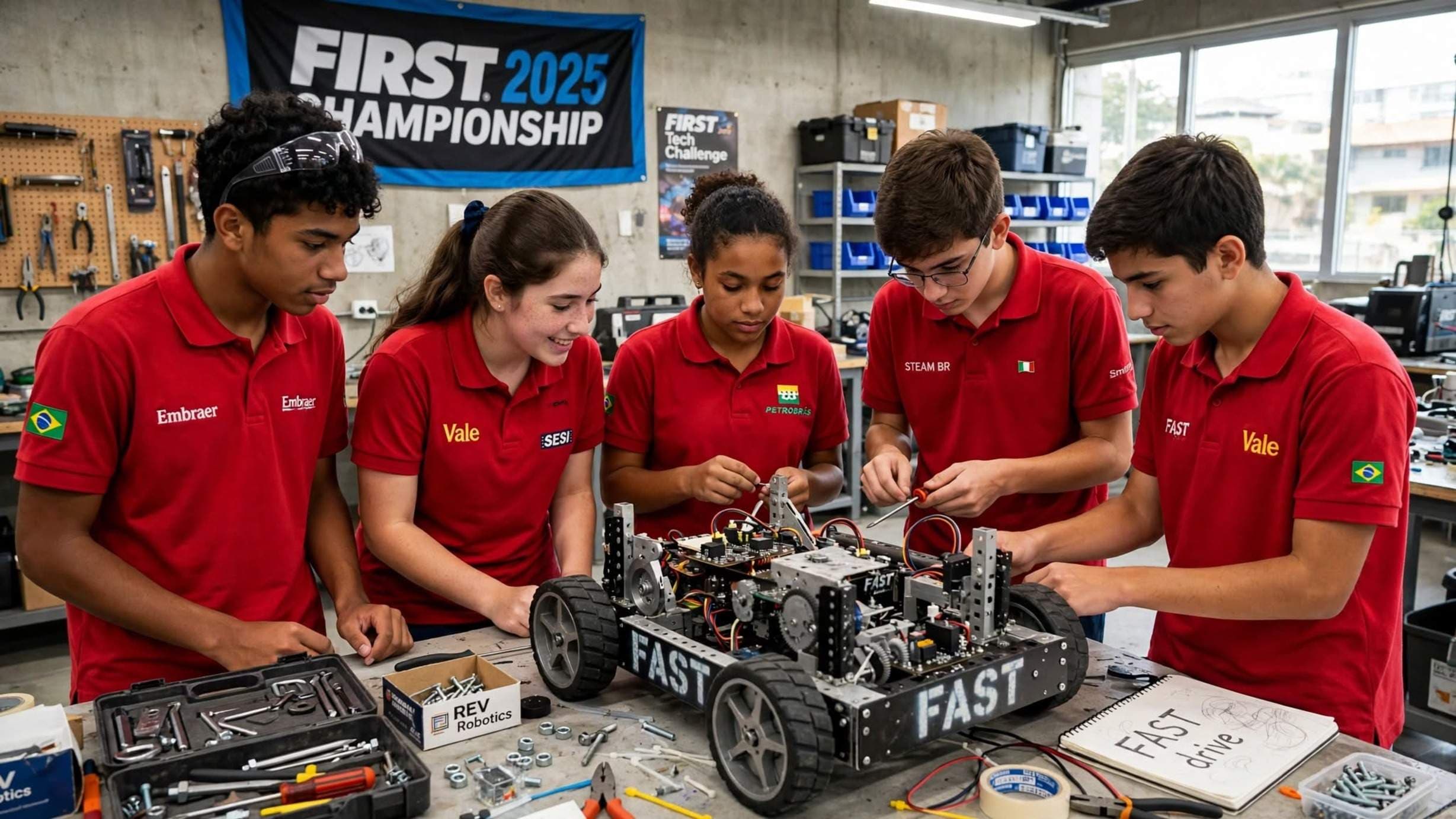
Instead of importing expensive metal parts and bolts, they invented their own construction method. As Heitor told cbinews.tv: "Since cost has always been an issue for us, we developed our own construction technology, our own building system. So instead of using metal parts and bolts, we use nylon cable ties and polycarbonate."
Footage from Belo Horizonte shows them coding, drilling, and battling their bots in the ring — hands-on engineering in its purest form.
This isn't just about trophies, it's about graft.
"I think the most interesting thing about the project is giving young people and competitors the opportunity to test things and create them with their own hands," Heitor said.
Sofia Lana put it even more beautifully after her Leadership Award win at the SESI tournament: "I think the feeling is indescribable, seeing something you've worked on for so long. Sometimes it meant spending weekends here, rehearsing with friends and putting so much effort into it all the time."
That weekend-after-weekend grind is what millions of teens across the Global South will recognise — the passion is there; the budget often isn't.
To understand why this is huge, you need to know what they beat.
The FIRST Tech Challenge (FTC) is one of the world's most prestigious STEM competitions for 12–18-year-olds, run by US non-profit FIRST. It's mid-level between LEGO League and the massive 52kg industrial robots of the FIRST Robotics Competition.
The 2026 World Championship — themed FIRST AGE, presented by Qualcomm — brought together more than 700 teams from 40 countries in Houston. It's often called the Olympics of youth robotics.
Brazil has been a rising force thanks to the SESI network — the Industry Social Service — which runs regional qualifiers across the country from Goiás to Minas Gerais, but it had never taken the top prize.
That changed this year. Team 17792 Amigos Droids became the first Brazilian team ever to win the Inspire Award, the highest judged honour at FTC. It's not just for the best robot — it rewards the team that is the best role model, excels in engineering, outreach, and gracious professionalism. The official 2026 records now list: Inspire Award Winner — 17792 Amigos Droids, Belo Horizonte, Brazil. They beat 336 elite FTC teams in Houston alone.
That win automatically inducted them into the FIRST Tech Challenge Hall of Fame, putting a scrappy, low-cost Brazilian project alongside the best-funded STEM academies in the US, Europe and Asia.
Why It Matters?
This is bigger than one team. Here's why:
1. The Cost Barrier Is Real. A standard FTC kit can cost $3,000-$6,000 plus shipping and import taxes, which in Brazil can double the price. For state schools and favelas, that's prohibitive. The Amigos Droids system uses locally available polycarbonate and cable ties — cheap, light, strong, and repairable with a pair of scissors.
2. It's a Social Technology. Coach Sergio said the success made them ask a bigger question — what about kids who don't have access at all? Their answer was deliberate: "To address that problem, we created a new technology, a new low-cost, high-precision engineering system that can bring robotics to other settings and other realities across Brazil and anywhere in the world."
This is frugal innovation — or gambiarra as Brazilians proudly call it — engineering that solves for scarcity.
3. STEM Equity. According to UNESCO, Brazil still has huge gaps in STEM access, especially outside the southeast. Projects like this are a blueprint for how to democratise robotics without waiting for huge government grants.
In short, they didn't just win a competition. They built a replicable model.
What's Next?
The Amigos Droids say they want to take their building system into more classrooms and vulnerable communities across Brazil — and potentially worldwide. With Hall of Fame status, they now have a global platform and interest from other low-resource teams.
Keep an eye on the SESI nationals next season — expect to see a lot more cable-tie bots in the ring. And if you're an educator, this is your cue: you don't need a fancy lab to start a robotics club. You need polycarbonate, cable ties, and a few friends willing to give up their weekends.
Source: cbinews.tv
#AmigosDroids #FirstTechChallenge #InspireAward #BrazilianInnovation #FrugalInnovation #Gambiarra #STEM #Robotics #BeloHorizonte #Houston2026 #SESI #LowCostTech #YouthInSTEM #EngineeringForGood #CBINews