

BBC's 'Surviving Biafra' Documentary Revives War Memories
Last update: June 2, 2026
Disclaimer: This website may contain affiliate links, which means we may earn a commission if you click on the link and make a purchase. We only recommend products or services that we personally use and believe will add value to our readers. Your support is appreciated!
It’s been nearly 60 years, but for those who lived it, the Nigerian Civil War never really ended. Now, a powerful new BBC documentary is giving them the mic, and Nigeria is listening.
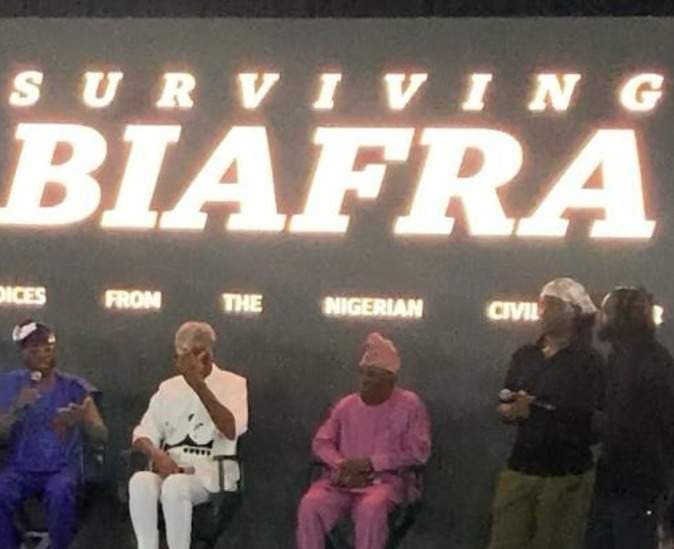
Almost six decades on, the echoes of the Nigerian Civil War are still with us. That became clear at a private screening in Lagos, where the BBC’s new documentary Surviving Biafra: Voices from the Civil War got people talking again about history, healing, and what unity really means for Nigeria today.
The 75-minute film premiered at the Afe Babalola Auditorium, University of Lagos. For many in the room, the war isn’t just history. It’s memory. Vivid, painful, and personal.
Directed by Grammy Award-winning filmmaker Meji Alabi and co-directed by Leke Alabi, Surviving Biafra doesn’t pick sides. Instead, it weaves together personal testimonies from both federal and Biafran perspectives, layered with rare BBC archive footage that most Nigerians have never seen.
The numbers are staggering. Between 600,000 and three million people died in the conflict, many from starvation. Allegations of war crimes and genocide still linger. But this documentary isn’t about statistics. It’s about the people behind them.
For the first time, voices like General Godwin Alabi-Isama of the Nigerian Army, Sosa Nwoke, a former corporal in the Eastern Region, and Alhaji Amusan Bolomope, a wartime photographer with the Nigerian Army, are sharing their stories publicly. And they all agree on one thing: these memories must be preserved.
As General Alabi-Isama told cbinews.tv, telling these stories is essential for future generations. Sosa Nwoke echoed that, noting that forgetting would mean risking it all again.
The survivors didn’t hold back. Both Alabi-Isama and Bolomope reflected on the brutal realities they faced, the chaos, the loss, and the sheer challenge of staying alive in a conflict that reshaped millions of lives forever.
So why now? Co-director Meji Alabi told cbinews.tv that Nigeria is at a critical moment. “This is the time to look back so we can move forward,” he said. His co-director, Leke Alabi, added that documentaries like this can bridge divides. Storytelling, he believes, is a tool for national dialogue, peace, and reconciliation.
Unity was the thread running through the entire screening. When asked what Nigeria needs to do to heal, Alabi-Isama, Nwoke, and Bolomope each pointed to honest conversation and learning from the past. No sugar coating, no erasing. Just truth.
The BBC played a key role in getting these stories out globally. Adline Okere, Editor of BBC Igbo Service, told cbinews.tv why the broadcaster backed the project. For her, it’s about reaching younger Nigerians who didn’t live through the war but are living with its legacy. “They have so much to learn from these voices,” she said, urging every Nigerian interested in the country’s history to watch it.
To reach as many people as possible, Surviving Biafra will also be available in Hausa, Pidgin, Igbo, Yoruba and French.
As Nigeria continues to wrestle with questions of nationhood, identity and healing, Surviving Biafra: Voices from the Civil War offers something rare, the chance to hear directly from those who were there. No filters, no textbooks. Just truth, as told by the survivors.
#SurvivingBiafra #NigerianCivilWar #BBCDocumentary #NigerianHistory #NationalUnity #Reconciliation #Biafra #Nigeria #MejiAlabi #NeverForget #AfricanHistory #CbinewsTV